
QUICK ANSWER
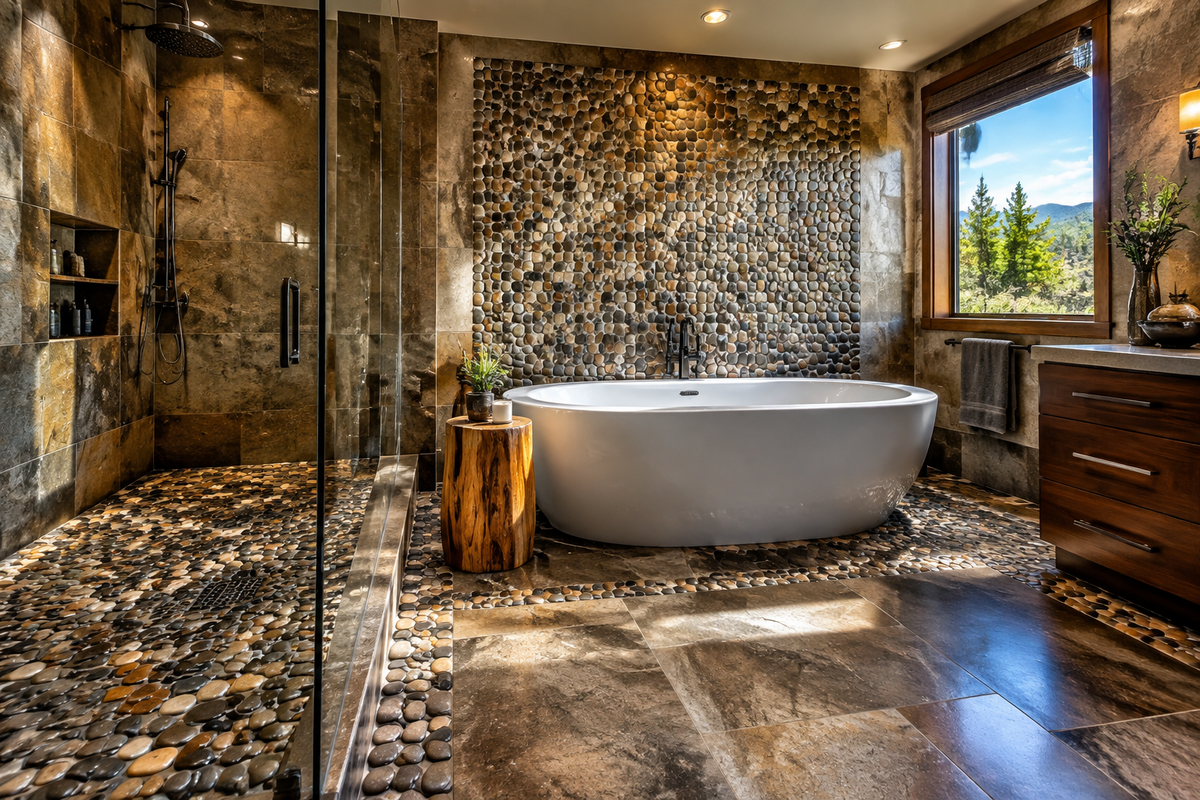
The main types of bathroom tile are ceramic, porcelain, natural stone, glass, mosaic, cement, and pebble tile. Porcelain is the most durable and water-resistant choice for floors and wet zones. Ceramic is the most budget-friendly for walls. Natural stone, including marble, travertine, slate, and quartzite, delivers the highest-end look. Glass and mosaic tile work best as accents and shower niches. Pebble tile is the top pick for organic, spa-style shower walls and floors.
The right choice depends on where it's going (floor, wall, or shower), your budget, how much maintenance you're willing to do, and your design goals.
Walk into any tile aisle and it's overwhelming: dozens of materials, hundreds of finishes, thousands of sizes, all claiming to be exactly what your bathroom needs. The stakes feel high too, since bathroom tile is a 10 to 30 year decision. Here's the pattern most tile mistakes actually follow: people rarely choose a bad tile. They choose the right tile for the wrong place. A beautiful polished marble that looks stunning on a feature wall becomes a maintenance headache on a shower floor. A budget ceramic that works brilliantly on a half-bath wall doesn't have the density for a high-traffic master bathroom floor.
This guide walks through every major type of bathroom tile: what it is, what it costs, where it performs, and where it doesn't, plus finishes, sizes, and a room-by-room decision guide.
Bathroom Tile Materials at a Glance
How to Think About Choosing Bathroom Tile
Before looking at a single tile, answer these four questions. They narrow the field faster than any trend report.
- Where is it going? Floor tile needs slip resistance and traffic durability. Wall tile just needs to adhere, not bear load. Shower tile must be water-rated and paired with proper waterproofing. Outdoor tile needs frost resistance.
- How much traffic will it handle? The Porcelain Enamel Institute (PEI) rates tile hardness from 1 (decorative only) to 5 (commercial heavy duty). For bathroom floors, PEI 3 is the minimum, and PEI 4 gives real durability margin for high-traffic master bathrooms. PEI rating is largely irrelevant for wall tile.
- What's your honest maintenance comfort level? Natural stone is extraordinary, but it needs annual sealing and pH-neutral cleaners. Porcelain needs almost none of that. Match the tile to your actual routine, not the one you wish you had.
- What's the all-in budget? Never price just the tile. Material, labor, thinset, grout, waterproofing, sealer, and trim typically add 40 to 80 percent on top of the tile price alone. An $8 per square foot tile can realistically cost $18 to $25 installed.
Ceramic Tile
Best for: walls and low-traffic floors | Cost: $1 to $10 per sq ft | DIY friendly: yes
Ceramic tile is made from natural clay, shaped, glazed, and fired in a kiln. The glaze is waterproof, but the clay body beneath isn't, which is why ceramic suits bathroom walls well and needs more careful consideration on high-moisture floors. It's been the backbone of American bathroom design for decades, delivering real performance at accessible prices with genuinely DIY-friendly installation. It's also softer than porcelain, which makes it easier to cut, a real advantage for complex shower layouts and plumbing cutouts.
PROS
- Most affordable option available
- Easiest to cut, highly DIY friendly
- Enormous variety of colors and patterns
- Waterproof glaze on walls
- 30 to 50 year lifespan with proper installation
CONS
- Less dense than porcelain, chips more easily
- Not ideal for very high-traffic floors
- Not suited to outdoor freeze-thaw climates
- Color is only in the surface glaze, so chips show white clay beneath
Use ceramic for bathroom walls, half-bath floors, and shower walls where aesthetics matter more than heavy traffic. For high-traffic master bathroom floors or shower zones, step up to porcelain. For the full comparison, see our ceramic vs porcelain tile guide.
Porcelain Tile
Best for: floors, showers, wet zones, outdoor | Cost: $3 to $30 per sq ft | DIY: moderate
Porcelain is a denser type of ceramic, fired at higher temperatures from finer clay. Its water absorption rate falls below 0.5 percent, essentially impervious to moisture, which makes it the most practical all-around choice for wet bathroom environments, high-traffic floors, and outdoor use in most American climates. Large-format porcelain panels (24 by 48 inches and up) are increasingly common in modern bathrooms, creating near-seamless surfaces with minimal grout. Digital printing now lets porcelain convincingly mimic marble, travertine, slate, and wood.
PROS
- Extremely durable, PEI 4 to 5 rated
- Water absorption under 0.5%, ideal for wet zones
- Frost-resistant, suitable outdoors
- Color runs through the tile, so chips show less
- Convincingly mimics stone, wood, and concrete
CONS
- Costs more upfront than ceramic
- Harder to cut, wet saw and professional install recommended
- Can feel cold underfoot without radiant heating
- Heavier, so substrate needs to support the weight
- Polished finishes are slippery on wet floors
Porcelain is the safest all-purpose bathroom tile. When in doubt between ceramic and porcelain for a wet or floor application, choose porcelain. See our complete porcelain tiles guide for more.
Natural Stone Tile: Marble, Travertine, Slate, Quartzite, and More
Best for: feature walls, luxury bathrooms, shower surrounds | Cost: $5 to $45+ per sq ft | DIY: advanced only
Natural stone is quarried directly from the earth, so every tile is a unique product of geology. Marble, travertine, slate, quartzite, granite, and limestone are the most common types in American bathrooms. The organic variation and authentic depth of real stone is genuinely irreplaceable. The critical decision with stone isn't which type looks best, it's which one performs correctly in your specific application, since hardness and porosity vary dramatically between types.
For shower walls and wet applications, quartzite and granite are the top-performing natural stones. For feature walls where beauty is the priority, marble and travertine are extraordinary. See our guides on natural stone wall tiles and stone walls in bathrooms for more.
Slate Tile Specifically
Slate deserves a closer look on its own, since it sits in a useful middle ground: harder and less porous than marble or travertine, but still full of the natural texture and color variation that makes stone appealing. It splits naturally into subtly textured surfaces, which gives it a grippier feel than polished stone, a real advantage on bathroom floors. Resealing every two years keeps it protected in a bathroom environment. It works well as a floor, a feature wall, or, in frost-resistant finishes, an outdoor bathroom application.
Pebble and River Rock Tile
Best for: shower walls, shower floors, spa-inspired bathrooms | Cost: $4 to $20 per sq ft | DIY: moderate, mesh backing helps
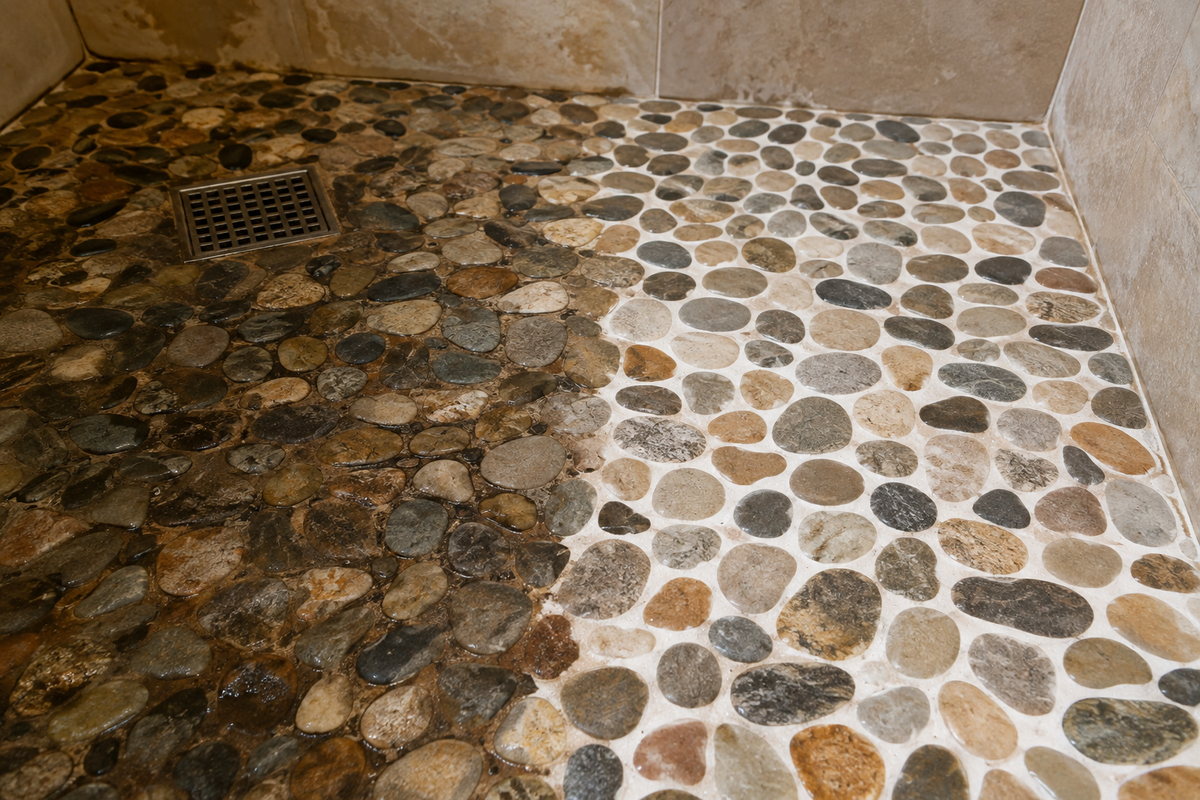
Natural pebble tile is river rock mounted on mesh backing sheets. These are actual stones, smoothed naturally over time, assembled to install like standard tile. The result is an organic, three-dimensional surface no manufactured tile fully replicates. There are two primary styles: round tumbled pebbles give the classic massage-like texture with more grout lines, while flat-sliced pebbles reveal each stone's interior for a smoother surface, shallower grout lines, and easier cleaning.
PROS
- Unmatched organic, spa-like look
- Natural slip resistance on shower floors
- Mesh backing simplifies installation
- Works on both walls and floors
CONS
- Round tumbled style has more grout to maintain
- Needs sealing before and after grouting
- Annual resealing in wet shower zones
Use flat-sliced pebble tile for easier maintenance, and round tumbled for maximum tactile texture. For shower floor specifics, see our pebble tile shower floors guide, and our sealing guide for upkeep. Browse the full range in our pebble tile collection.
Glass Tile
Best for: shower accents, niches, backsplashes | Cost: $7 to $30+ per sq ft | DIY: difficult, professional recommended
Glass tile is non-porous and doesn't absorb moisture, making it inherently resistant to mold and mildew. Its standout quality is reflectivity, bouncing light around a space to make small bathrooms feel brighter. It's most effective as an accent: a shower niche, a decorative band, a vanity backsplash, or a border framing another material. For more detail, see our full glass tile pros and cons guide.
Mosaic Tile
Best for: shower floors, accent walls, niches | Cost: $5 to $25+ per sq ft | DIY: moderate
Mosaic is a format, not a material. It refers to small pieces, typically 2 inches or smaller, mounted on mesh sheets, and those pieces can be ceramic, porcelain, glass, natural stone, or pebble. Grout line density gives mosaic genuine slip resistance, making it one of the best-performing formats for shower floors. See our guide on what mosaic tile is and how to use it.
Cement and Encaustic Tile
Best for: feature walls, powder rooms, lower-traffic floors | Cost: $5 to $25 per sq ft | DIY: moderate, with proper sealing
Cement tiles are made from Portland cement, aggregate, and pigment pressed under high pressure rather than kiln-fired. Color runs through the full tile thickness, so it never wears through the way a surface glaze can. They're not suited to continuous wet exposure like a shower floor without a rigorous sealing program, but they're genuinely striking in powder rooms and feature walls.
Bathroom Tile Finishes Explained
The finish determines how a tile looks, how safely it performs underfoot, and how easy it is to clean, which matters as much as the material choice.
- Polished: high-gloss and mirror-like. Stunning on walls, never use on floors, dangerously slippery when wet.
- Honed: smooth, matte or satin, no gloss. Safe for floors and walls, the most versatile finish.
- Matte: flat, non-reflective, hides water spots well. A top choice for floors.
- Textured / grip: deliberately roughened for slip resistance. Best for shower floors.
- Tumbled: softened edges for a naturally aged look with built-in slip resistance. Popular for pebble tile and travertine.
- Glazed: high-shine ceramic coating, bright and easy to wipe on walls. Pair with a grip-rated version on floors.
SAFETY NOTE
For any bathroom floor in a wet zone or shower, the tile should carry a Dynamic Coefficient of Friction (DCOF) rating of 0.42 or higher, the ANSI A137.1 standard for wet areas. Confirm this rating with your supplier before buying floor tile for a wet application. Polished and high-gloss finishes rarely meet this threshold.
Tile Sizes and Formats: What to Use Where
DESIGN TIP
Large-format tiles (24 inches and up) make small bathrooms feel noticeably bigger by cutting down the grout lines that visually fragment a surface. It's one of the most effective, budget-neutral techniques professional designers use in compact spaces. For small shower spaces specifically, see our shower tile ideas for small spaces guide.
Room-by-Room Tile Selection Guide
Real Cost Breakdown
Always order 10 to 15 percent more tile than your measured area, and 15 to 20 percent for diagonal or herringbone layouts. For natural stone and pebble tile specifically, see our pebble tile cost guide for a detailed project breakdown.
Frequently Asked Questions
What is the best type of tile for a bathroom floor?
Porcelain is the best all-around choice, highly durable, water absorption under 0.5 percent, and available in slip-resistant finishes for any climate. For a premium natural feel, quartzite and granite perform excellently with lower maintenance than other stone types. Any wet-area floor tile should carry a DCOF rating of 0.42 or higher.
What are the main types of bathroom tile called?
Ceramic, porcelain, natural stone (including marble, travertine, slate, and quartzite), glass, mosaic, cement, and pebble tile are the main categories used in American bathrooms today.
What's the difference between ceramic and porcelain tile?
Both are clay-based and kiln-fired, but porcelain uses finer clay fired at higher temperatures, producing a denser, harder, less porous tile. Porcelain's water absorption (under 0.5 percent) is far lower than ceramic's (up to 3 percent). Ceramic suits walls and lower-traffic floors; porcelain suits wet zones and high-traffic areas.
Is glossy or matte tile better for bathrooms?
Use glossy tile on walls, where it reflects light and wipes clean easily. Use matte or textured tile on floors, since glossy tile is slippery when wet and typically doesn't meet the DCOF 0.42 safety standard. A common approach layers both: glossy walls with matte or honed floors.
What tile makes a small bathroom look bigger?
Large-format tiles (24 inches and up) with minimal grout lines create the strongest visual expansion. Light colors help reflect available light, and running the same tile from floor into shower without a transition strip amplifies the effect.
Can I mix different types of tile in the same bathroom?
Yes, and it's a common, effective approach: large-format porcelain on walls with pebble tile on the shower floor, or neutral porcelain throughout with a marble or glass mosaic niche accent. Keep the palette to two or three colors, and make sure each tile is rated for its specific location.
Do bathroom tiles need to be sealed?
Porcelain, ceramic, and glass don't need sealing. Natural stone needs sealing in wet areas. Pebble tile needs sealing before grouting and annual resealing in showers. Cement tile is very porous and needs thorough sealing before and after grouting.
Conclusion: Match the Tile to the Space, Not Just the Trend
Every type of bathroom tile has a place where it performs beautifully, and a place where it doesn't belong. The homeowners who end up most satisfied aren't the ones who chose the most expensive option or the latest trend. They're the ones who matched their tile to its specific location, their honest maintenance commitment, their budget, and their design vision, then had it installed correctly. Porcelain for durable, low-maintenance floors and wet zones. Ceramic for budget-friendly walls. Natural stone for authentic luxury. Pebble tile for spa-inspired showers with organic character. Glass and mosaic for light-reflecting accents.
Ready to find the right tile for your bathroom? Pebble Tile Shop carries natural pebble tile, sliced stone mosaics, marble tile, and glass tile, with samples available so you can see the real material under your own lighting before committing.
Ready to plan your bathroom tile project? Browse our full tile collection.
Shop Now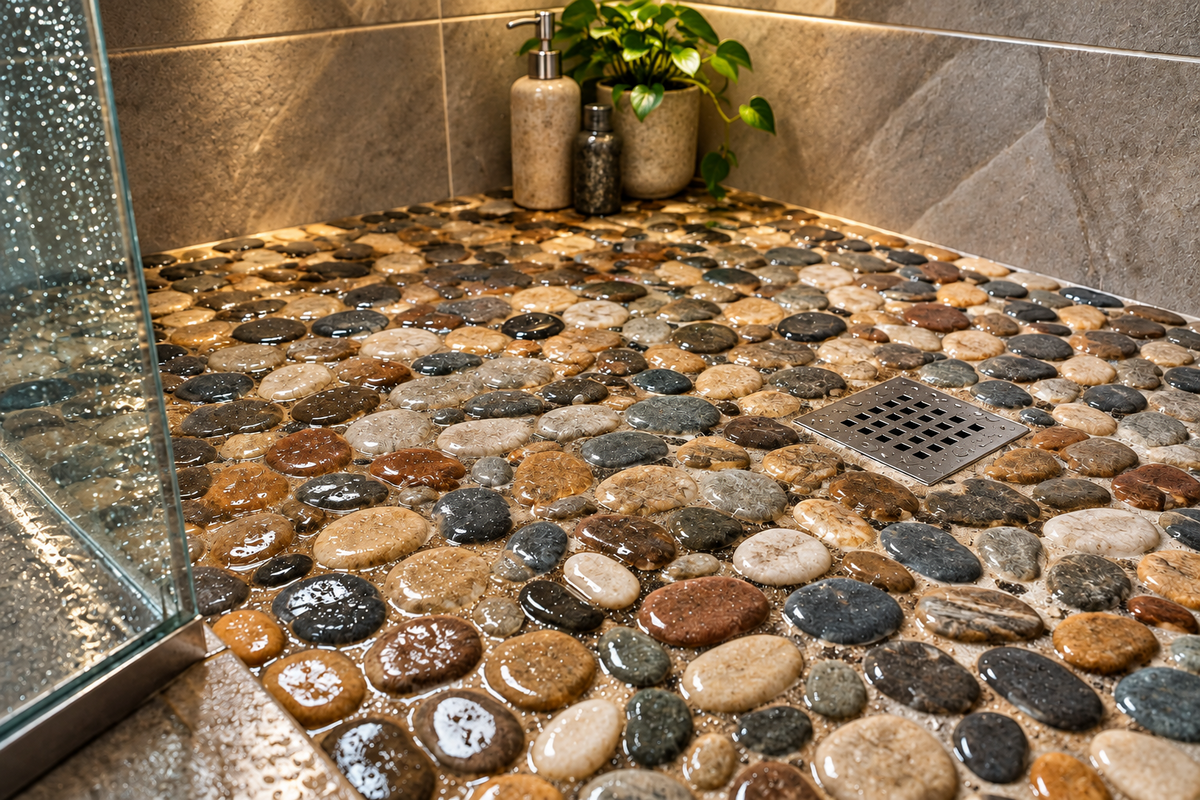

Leave a comment
This site is protected by hCaptcha and the hCaptcha Privacy Policy and Terms of Service apply.