
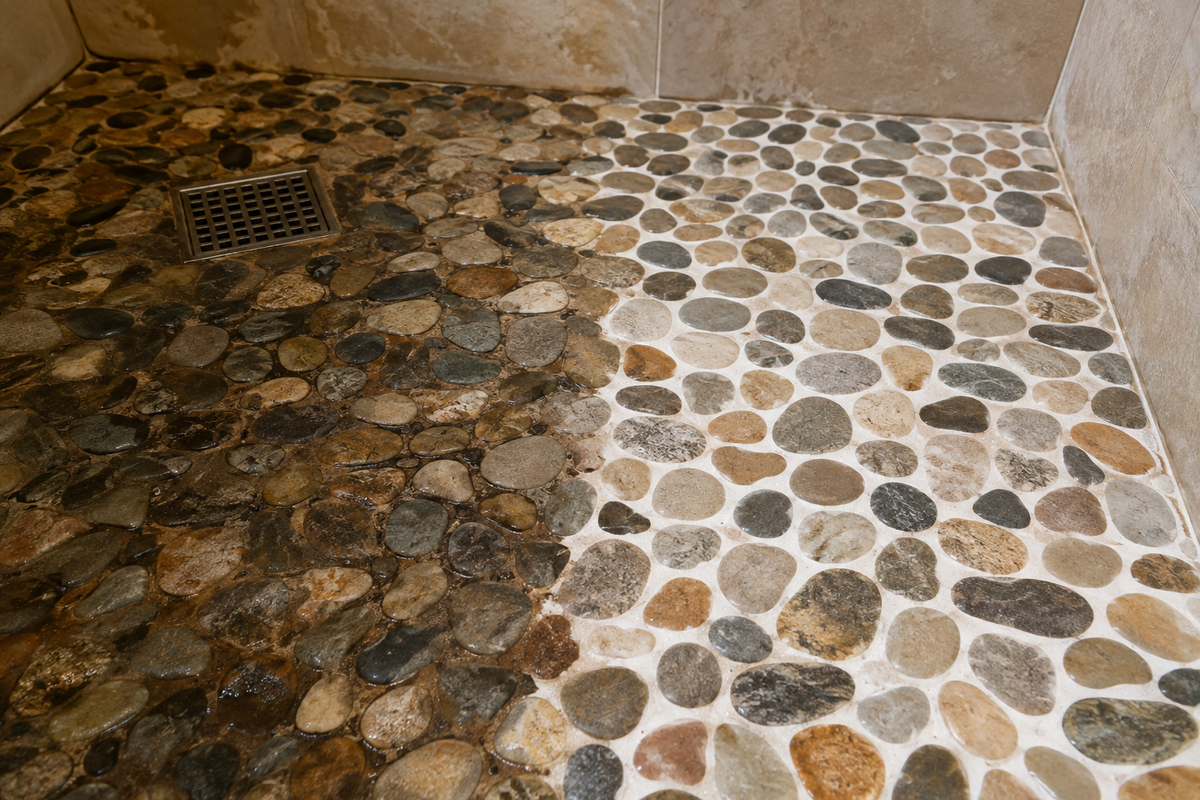
QUICK ANSWER
- Mold and mildew: an oxygen bleach or hydrogen peroxide-based cleaner
- Soap scum and hard water: a mild alkaline or acidic cleaner, never on natural stone
- Colored or epoxy grout: skip chlorine bleach, which can fade or discolor it
- Natural stone surrounds: pH-neutral only, acidic cleaners etch stone
- After cleaning: always reseal, or stains come right back
Dirty, discolored grout can make even the most beautiful tile installation look neglected. Grout is porous by nature, a mix of cement, sand, and water, so it absorbs liquids, dirt, and moisture the way the tile around it doesn't. That's what makes it such a magnet for mold, soap scum, and hard water stains, and why it's genuinely harder to clean than the tile itself. This guide covers why grout stains in the first place, how to match a cleaning method to the stain you actually have, real DIY recipes that work, and the step-by-step process for getting it clean and keeping it that way.
Why Grout Gets So Dirty
- Mold and mildew growth in damp environments like showers
- Food and beverage spills that seep into the porous material
- Soap scum buildup from showers and sinks
- Hard water deposits containing minerals that stain over time
- Foot traffic bringing in dirt and oils, especially on floors
- Worn or missing sealant that's no longer protecting the surface
Grout's rough, recessed texture also traps dirt in a way flat tile doesn't, which is why regular mopping rarely gets it fully clean.
Match the Cleaner to the Stain
Always test any product in an inconspicuous spot first, especially on colored grout or natural stone surrounds.
Ways to Clean Grout, by Method
Chemical-based cleaners
Use bleach, hydrogen peroxide, or alkaline compounds for the strongest stain removal on severely dirty grout. Needs ventilation and gloves, and can damage colored grout or natural stone.
Natural and eco-friendly cleaners
Plant-based formulas and natural acids are gentler on households with kids, pets, or chemical sensitivities. Usually needs more scrubbing and may be less effective on the worst stains.
Steam cleaning
High-temperature vapor loosens dirt and kills bacteria with no chemicals. Requires equipment and an outlet, and can be slow across a large floor.
Grout brushes and tools
A stiff narrow brush, old toothbrush, or electric scrubber reaches into grout lines better than a sponge. Still needs a cleaning solution to pair with it.
DIY Grout Cleaning Recipes That Actually Work
- Baking soda and hydrogen peroxide: mix 3 parts baking soda with 1 part hydrogen peroxide, add a drop of dish soap, apply to grout, let sit 10 minutes, scrub and rinse
- Vinegar and baking soda: sprinkle baking soda on the grout, spray with a 1:1 vinegar and water solution, let it bubble a few minutes, then scrub and rinse. Skip this on natural stone or marble, since the acid can etch the surface
- Oxygen bleach solution: dissolve oxygen bleach powder in warm water per the package instructions, apply, let sit 15 to 30 minutes, scrub if needed, and rinse thoroughly
These DIY methods work well for routine maintenance. For grout that's been neglected for years, a dedicated commercial cleaner or professional service will usually outperform a homemade mix.
PRO TIP: DON'T MIX CLEANING CHEMICALS
Never combine bleach-based and ammonia or acid-based cleaners, including some natural recipes layered on top of a leftover commercial product. The combination can create toxic fumes. Rinse thoroughly and let grout dry before switching products.
Step-by-Step: How to Clean Grout Properly
- Prepare. Sweep or vacuum loose dirt, gather supplies, and make sure the area is ventilated if using a chemical cleaner. Test any new product in an inconspicuous spot first.
- Pre-treat. A quick pass with warm water and a little dish soap, or a baking soda paste on stubborn spots, loosens surface dirt before the main treatment.
- Apply the cleaner. Follow the product's instructions and make sure every grout line gets even coverage.
- Let it dwell. Most cleaners need 5 to 15 minutes of contact time to actually break down the stain. Don't let it dry out completely, and don't rush to scrub before it's had time to work.
- Scrub. Use a grout brush or old toothbrush in a back-and-forth motion along the line, working in small sections.
- Rinse thoroughly. Leftover cleaner residue attracts more dirt and can leave a hazy film. Multiple rinses are often worth it.
- Dry completely. Give it a full 24 hours before sealing, and use a fan to speed drying and discourage mold.
Seal It After You Clean It
Cleaning grout without resealing it is a short-term fix. Unsealed grout absorbs the next spill, the next shower splash, the next bit of soap scum, and you're back to where you started within weeks. A quality sealer is what actually protects the work you just did.
See our full tile sealer guide for how to choose and apply the right one, and our sanded vs unsanded grout guide if you're also choosing grout for a new installation.
Maintenance That Keeps Grout Clean Longer
- Daily: squeegee shower walls after use, wipe up spills immediately, use mats in high-traffic spots
- Weekly: a quick spray-and-wipe on grout lines, run a fan or dehumidifier to cut bathroom moisture
- Monthly: check sealant for wear, look for loose or damaged grout that needs repair
- Seasonally: reseal high-use areas annually, deep clean kitchen backsplash grout every few months
Grout Cleaning by Room
- Bathroom: the biggest threats are mold, mildew, soap scum, and hard water. An oxygen-based or mild bleach cleaner used regularly keeps ahead of it.
- Kitchen: grease and food staining, especially tomato-based spills, are the main challenge. A degreasing, stain-lifting cleaner works best here.
- Entryways and high-traffic floors: outdoor dirt, salt, and ground-in grime call for a heavier-duty formula and more frequent sweeping.
- Outdoor grout: weather exposure and plant growth are the main issues. Look for a formula with mildew resistance built in.
Common Mistakes That Undo Good Cleaning
- Using the wrong cleaner for the surface: acidic cleaners on stone, bleach on colored grout, and abrasive scrubbers on delicate tile all cause damage over time
- Not giving the cleaner enough dwell time: scrubbing immediately rarely works as well as letting the product sit
- Rinsing too little: leftover residue attracts dirt right back and can leave a hazy film
- Skipping ventilation: chemical cleaners need airflow for safety and proper drying
- Skipping the reseal: cleaning without resealing means the stains come back fast
When to Call a Professional
Some situations are worth handing off: extensive mold that might signal an underlying moisture problem, cracked or crumbling grout that needs repair rather than cleaning, historic or specialty tile that needs expert handling, or a DIY attempt that made things worse. Professional services typically bring industrial-strength tools, like high-pressure steam extraction, that aren't practical to own for a one-time job.
Know Your Grout Type Before You Clean
- Cement-based grout (the most common type) works with most cleaners, but highly acidic products can wear it down over time
- Epoxy grout is more stain-resistant by nature, but harsh chemicals can still discolor it
- Colored grout can be bleached or faded by chlorine-based cleaners, so stick to color-safe formulas
- Natural stone surrounds can be etched by acidic cleaners, so pH-neutral is the safe default
When in doubt, check the manufacturer's care instructions for your specific grout before reaching for a cleaner, and always test in a hidden spot first.
How Much Effort Are You Willing to Put In?
Be realistic about this before choosing a method. Manual scrubbing with a basic cleaner costs the least but takes the most physical effort. A no-scrub chemical formula costs more but saves labor. An electric scrubbing tool is a worthwhile investment if you're maintaining a large tiled area regularly. And a good sealant, while not a cleaner itself, is the step that reduces how often you need to deep clean at all.
Frequently Asked Questions
What is the best grout cleaner?
It depends on the stain. Oxygen bleach or hydrogen peroxide-based cleaners handle mold and mildew well. Alkaline formulas work on soap scum and food stains. Always match the cleaner to your grout type, especially with colored grout or natural stone, where the wrong product can cause damage.
What cleans grout the best for a shower?
An oxygen-based or mild bleach cleaner targets the mold and soap scum that build up fastest in a shower. For stone surrounds, stick to a pH-neutral formula to avoid etching.
What's the best natural grout cleaner?
A baking soda and hydrogen peroxide paste is an effective, chemical-free option for routine cleaning. It needs more scrubbing than a commercial formula but works well on light to moderate staining.
How do I clean floor grout specifically?
Floor grout usually needs a heavier-duty approach than wall grout, since it collects foot traffic dirt and ground-in grime. Sweep first, apply a cleaner suited to the stain type, give it full dwell time, scrub with a stiff brush, and rinse well before resealing.
Can I use bleach on grout?
On plain white cement grout, yes, in moderation and with good ventilation. On colored or epoxy grout, bleach can fade or discolor it, so choose a color-safe, non-bleach formula instead.
How often should I reseal grout?
Once a year is a reasonable baseline for high-use areas like showers and kitchen floors. Lower-traffic areas can often go longer between resealing.
Why does my grout keep getting dirty right after cleaning?
This almost always means the grout isn't sealed, or the sealant has worn off. Unsealed grout is porous and absorbs new dirt and moisture immediately, which is why resealing after every deep clean matters as much as the cleaning itself.
Is steam cleaning better than chemical cleaners for grout?
Steam is a strong chemical-free option that sanitizes as it cleans, but it requires equipment and takes longer over a large area. For routine maintenance it works well; for severely neglected grout, a targeted chemical cleaner often gets there faster.
Conclusion
Clean grout isn't about finding one miracle product, it's about matching the cleaner to the actual stain, giving it time to work, and resealing once it's done. Get that sequence right and grout stops being the thing that makes a beautiful tile job look neglected.
Ready to protect your newly cleaned grout? Pebble Tile Shop carries sealants built to keep tile and grout looking right for years.
Ready to seal your grout after cleaning? Browse our sealant collection.
Shop Now

Leave a comment
This site is protected by hCaptcha and the hCaptcha Privacy Policy and Terms of Service apply.