
QUICK ANSWER
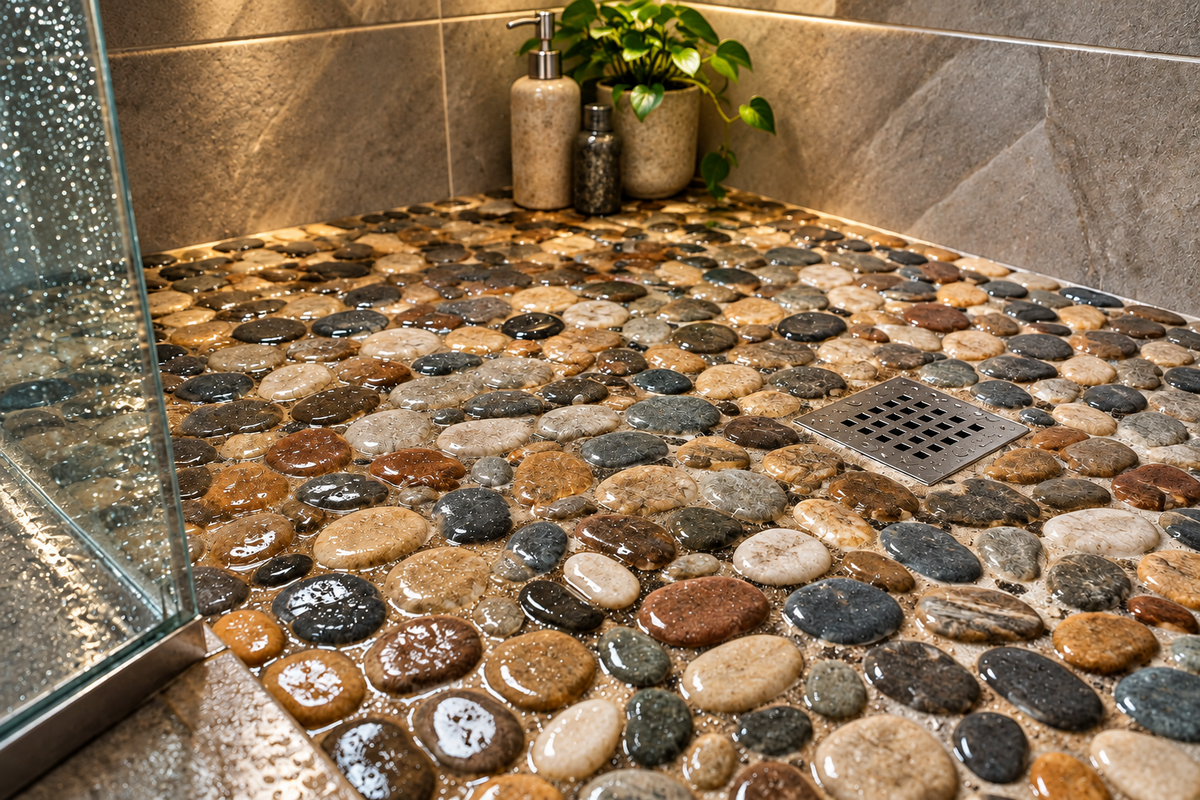
- Are they out of style in 2026? No. Natural stone and organic texture are trending up, and pebble stays a mainstay for spa-style showers
- Biggest pro: genuine slip resistance from the textured, uneven surface
- Biggest con: more grout lines than flat tile, which means more grout maintenance
- Good fit for: spa-style bathrooms, curbless showers, anyone who wants a natural, textured feel underfoot
- Skip it if: you have mobility concerns with uneven surfaces, or want the lowest-maintenance option possible
Pebble tile shower floors bring a natural, spa-like texture into a bathroom that flat tile simply can't match. They've been a popular choice for over a decade, and they still hold up well against current design trends. But the same texture that makes them beautiful also shapes how they perform day to day: how they feel underfoot, how much grout care they need, and how they compare to other shower floor materials. This guide covers the real pros and cons, where pebble tile fits best, and what to expect if you choose it.
Are Pebble Shower Floors Still in Style?
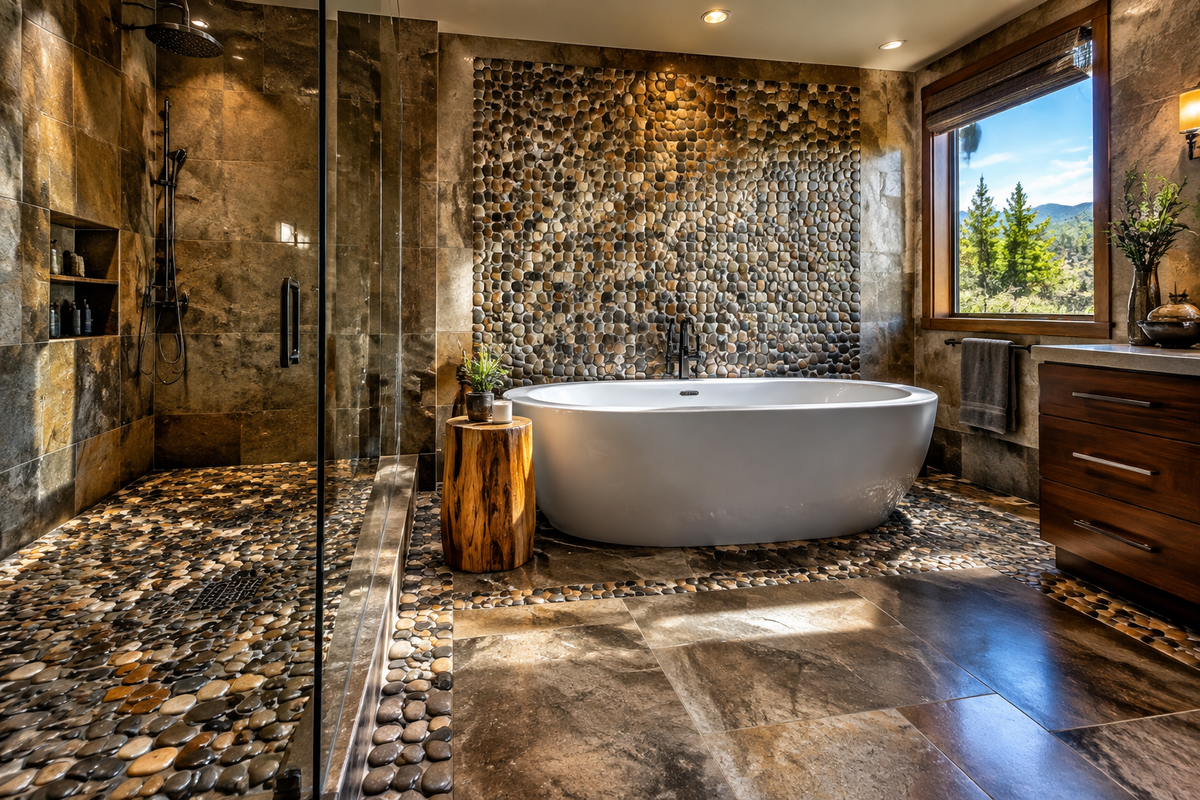
Yes. If anything, the broader design trend toward natural materials, organic shapes, and textured surfaces has kept pebble tile relevant rather than dated. Where trends have shifted is in how pebble tile gets used: instead of covering an entire bathroom floor, it's now more often reserved for the shower floor itself, paired with a large-format porcelain or stone-look tile everywhere else. That combination gives you pebble's texture and slip resistance exactly where it matters most, without the added grout maintenance across the whole room.
What Are Pebble Tile Shower Floors?
Pebble tile shower floors are made from small, smooth, rounded stones, typically river rock, marble, or slate, sorted and set onto mesh sheets. The sheets install like any mosaic tile, and the result is a textured surface with the look and feel of a natural riverbed underfoot.
Pros and Cons at a Glance
PROS
- Genuine slip resistance from the textured surface
- One-of-a-kind natural look, no two floors identical
- Very durable natural stone
- Comfortable, massaging feel underfoot
- Water-resistant stone that won't absorb moisture
- A renewable, natural material
CONS
- More labor-intensive to install than flat tile
- More grout lines, so more grout upkeep
- Uneven surface, a real consideration for mobility needs
- Individual stones can crack or loosen if not sealed properly
- Costs more per square foot than basic ceramic
The Pros in Detail
- Slip resistance. The rounded, uneven surface of the stones creates real traction underfoot, which is one of the most practical safety advantages of any shower floor material, and a genuine reason it suits households with kids or older adults.
- A natural, one-of-a-kind look. Because every stone sheet is sorted by hand from natural material, no two floors look exactly alike. Color and pattern choices range from calm monochromatic grays and creams to bolder mixed-color blends.
- Durability. Natural stone resists cracking and general wear well, and with proper sealing, a pebble floor can last for decades.
- Comfort underfoot. The rounded stones give a gentle, massaging feel that's part of why pebble showers read as spa-like rather than purely functional.
- Water resistance. The stone itself doesn't absorb moisture the way some porous materials do, which matters in a wet environment used daily.
The Cons in Detail
- Installation takes more skill. Irregular stone shapes are harder to lay evenly than square tile, and getting consistent grout lines takes real attention to detail. A professional installer experienced with pebble tile is worth it for most homeowners; see our pebble tile shower floor installation guide if you're considering DIY.
- Grout needs more attention. Pebble tile simply has more grout surface than flat tile, and grout is where soap scum and mildew tend to collect. Regular cleaning and periodic resealing keep it looking right; our pebble shower floor sealing guide covers the schedule.
- The surface is uneven by design. That's part of the appeal for most people, but it's worth considering if anyone using the shower has mobility concerns, since a completely flat surface may be safer for some households.
- Individual stones can loosen over time if the floor isn't sealed and maintained properly, though this is uncommon with correct installation and care.
- Cost. Pebble tile generally costs more than basic ceramic, both in material and labor. Our pebble tile cost guide breaks down real project numbers.
Pebble Tile vs. Other Shower Floor Materials
Sheet-mounted pebble tile gives you the texture and grip of loose river rock with a far more practical, sealed installation. If you're weighing that comparison directly, it's worth a look before deciding.
Design Ideas for Pebble Shower Floors
- Monochromatic gray or cream: a calm, sophisticated look that pairs well with almost any bathroom style
- Contrasting border: darker pebbles framing the edge with lighter stone in the center
- Mixed natural tones: browns, tans, and grays blended for an organic, riverbed feel
- Pebble as an accent only: reserve pebble for the shower floor or a niche, and pair it with large-format tile everywhere else to limit grout upkeep
Featured Pebble Tile for Shower Floors
A few natural and sliced options well suited to a shower floor.
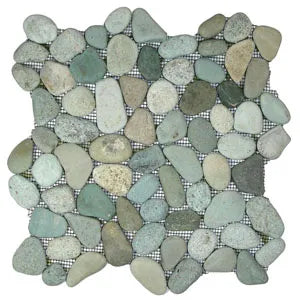
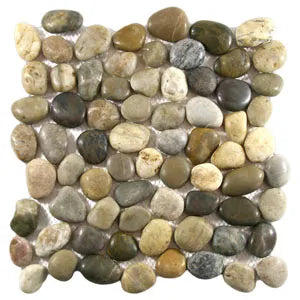
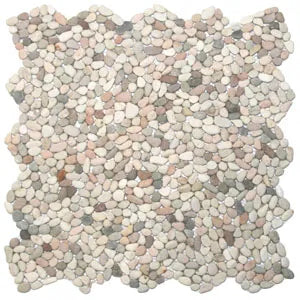
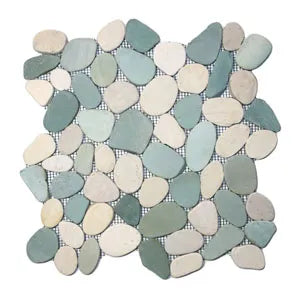
Browse the full pebble tile collection
PRO TIP: PAIR PEBBLE WITH A LARGER TILE
You don't have to tile the whole bathroom in pebble to get the look. Using it on the shower floor alone, paired with a large-format tile on the walls and main floor, gives you the texture and slip resistance where it counts most, with far less grout to maintain overall.
Is a Pebble Tile Shower Floor Right for You?
Pebble tile earns its popularity honestly: real slip resistance, a natural look no manufactured tile fully replicates, and a spa-like feel underfoot. It asks for more in return than a flat tile floor, more careful installation, more grout upkeep, and a higher upfront cost. For most bathrooms, especially where safety and a natural aesthetic both matter, that trade is worth making. If low maintenance or a perfectly flat surface is the top priority, a large-format textured porcelain may serve better.
What Installation Actually Involves
- A properly sloped, waterproofed substrate underneath, since shower floors need to drain correctly
- Mesh-backed pebble sheets set into thinset mortar, cut to fit around the drain
- Grout packed fully between the irregular stone shapes, which takes more time than flat tile
- Sealing the stone before grouting and again after, a two-stage process that protects against staining
This is a project where hiring an experienced installer pays off, since a poorly sloped or under-sealed pebble floor is far more expensive to fix than to do right the first time. Our installation guide walks through the full process if you want the details.
Who Pebble Tile Suits Best
- Great fit: anyone prioritizing slip resistance, a spa-style aesthetic, or a natural, organic look
- Great fit: households building or renovating a primary bathroom they plan to keep long-term
- Worth reconsidering: households with a family member who has mobility concerns and needs the flattest possible surface
- Worth reconsidering: anyone who wants the absolute lowest-maintenance shower floor with minimal grout care
Caring for a Pebble Shower Floor Long Term
- Wipe down after use when possible, or run the bathroom fan to reduce lingering moisture
- Clean with a pH-neutral cleaner rather than harsh or acidic products, which can wear down sealer over time
- Reseal on the schedule recommended for your specific stone, typically once a year in a daily-use shower
- Address any loose or cracked stone promptly rather than waiting, since a small repair is far easier than a larger one
Frequently Asked Questions
Are pebble shower floors out of style?
No. Natural materials and textured surfaces remain a strong design trend. Pebble tile is now more often used as a shower-floor accent paired with large-format tile elsewhere, rather than covering an entire bathroom.
Is pebble tile good for a shower floor?
Yes. Its textured, uneven surface provides genuine slip resistance, which is one of the most important safety features in a shower. It does require more grout care than flat tile in exchange.
Is a seamless pebble floor an option?
Not in the way a poured or sheet-vinyl floor is seamless. Pebble tile is set in sheets with grout lines between stones, which is what gives it both its texture and its slip resistance. A truly seamless look isn't the goal with this material.
Does Pebble Tile Shop carry glass pebble tile for showers?
Our pebble tile collection is natural stone. If you're drawn to a glass look for a shower floor, our glass tile collection is worth a look, though a textured, slip-rated finish is important for any glass tile used underfoot.
How much maintenance does a pebble shower floor need?
Routine cleaning with a mild cleaner and warm water, plus periodic resealing of the stone and grout. It's more upkeep than flat tile, but manageable with a regular routine.
Can pebble tile crack or loosen over time?
It's uncommon with proper installation and sealing. Individual stones are more likely to loosen if the floor isn't sealed correctly or if grout is neglected over a long period.
Do pebble shower floors work with a curbless shower?
Yes, and the slip resistance makes pebble tile a particularly good match for a curbless design, where the transition between wet and dry areas needs reliable traction.
Is pebble tile more expensive than a standard shower floor?
Generally yes, both in materials and installation labor, since the irregular stones take longer to set and grout than flat tile. See our pebble tile cost guide for real project numbers.
Conclusion
Pebble tile shower floors remain a strong choice in 2026, delivering real slip resistance and a natural texture that stays on trend rather than dating a bathroom. Weigh the extra grout care and installation effort against the safety and spa-like feel you get in return, and for most bathrooms, that trade holds up well.
Ready to explore pebble tile for your shower? Pebble Tile Shop carries natural, sliced, and mini pebble tile suited to showers, floors, and accent walls.
Ready to plan your pebble shower floor? Browse our full pebble tile collection.
Shop Pebble Tile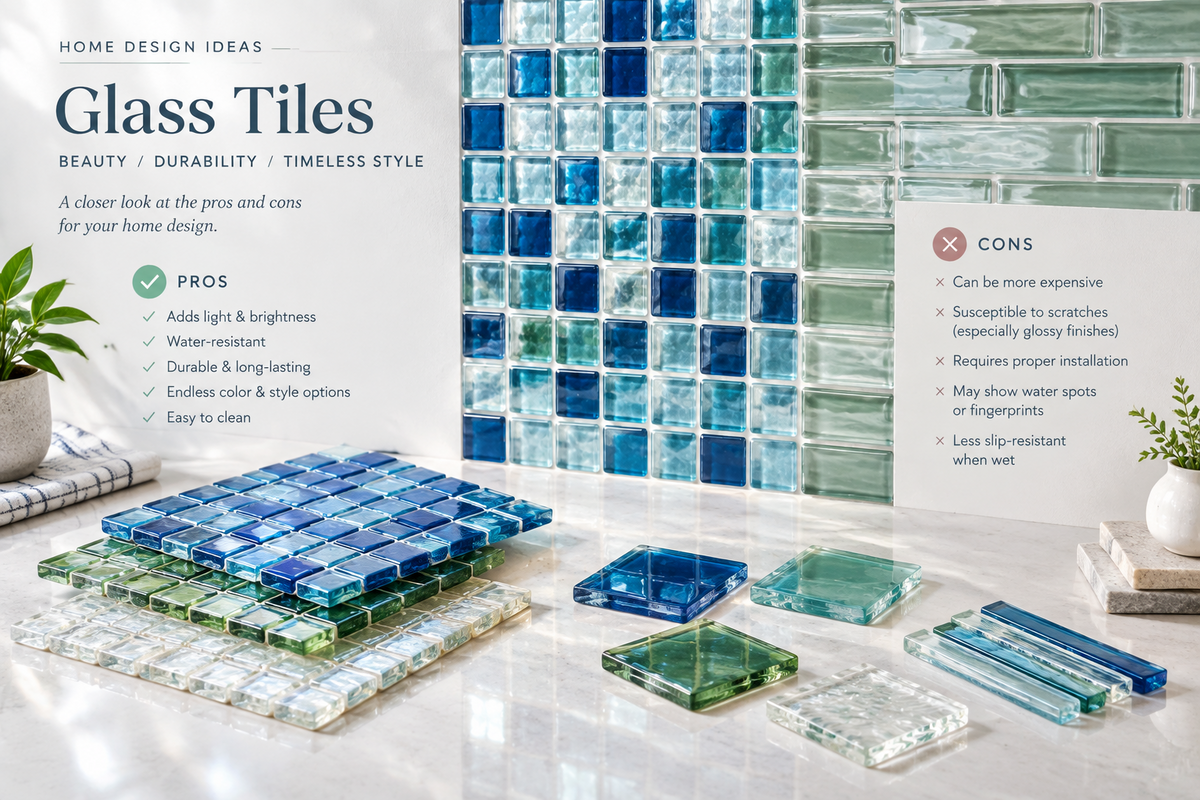

Leave a comment
This site is protected by hCaptcha and the hCaptcha Privacy Policy and Terms of Service apply.