
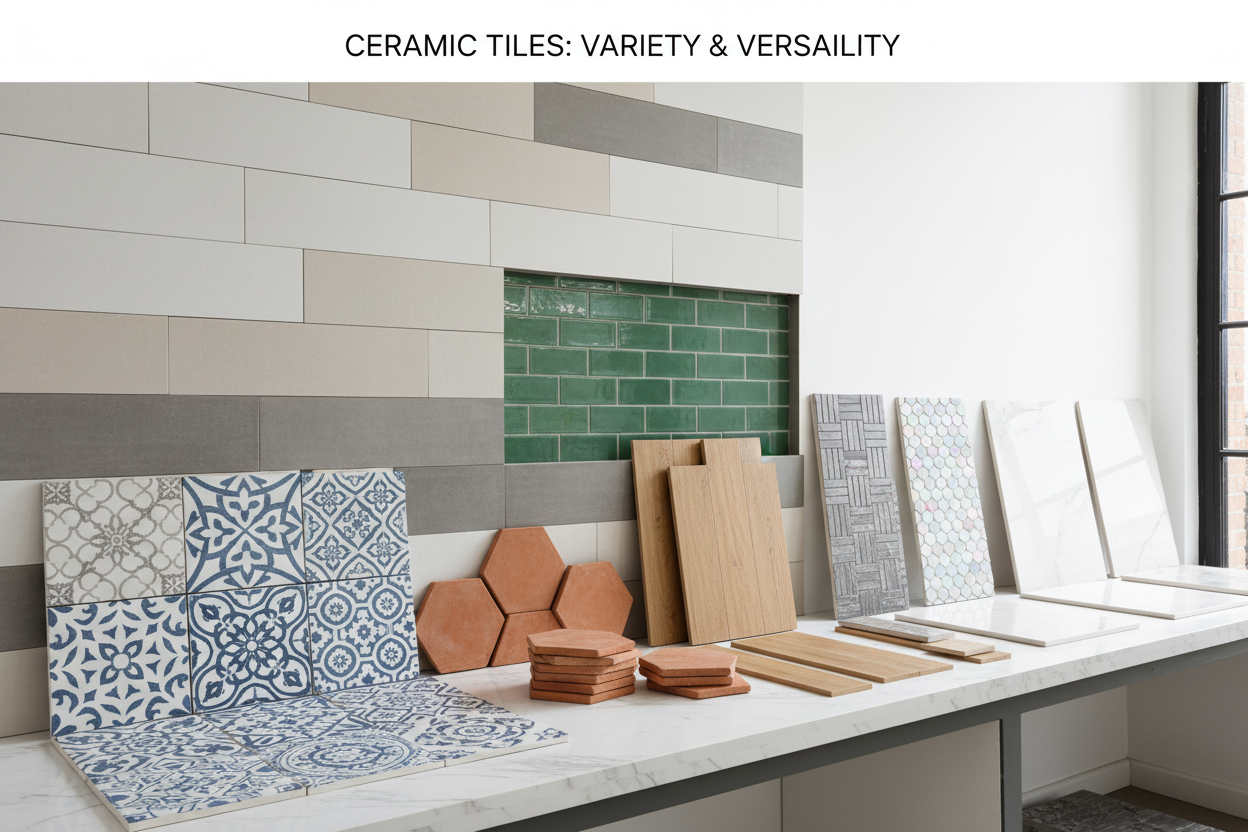
Quick Answer: What Is Ceramic Tile?
Ceramic tile is a hard, flat covering material made from natural clay mixed with minerals, shaped into tiles, and fired in a high-temperature kiln. A glaze is applied to most ceramic tiles before firing, creating a waterproof, decorative surface. Ceramic tile is one of the most widely used flooring and wall materials in American homes — valued for its durability, water resistance, design versatility, and relatively affordable price compared to natural stone or porcelain.
If you've ever renovated a bathroom, tiled a kitchen backsplash, or walked the flooring aisle at a home improvement store, you've encountered ceramic tile. It's everywhere — and for good reason. Ceramic tile has been used in human construction for thousands of years, from the decorative walls of ancient Mesopotamia to the subway tile bathrooms of turn-of-the-century New York to the large-format matte floors of today's modern American homes. It's one of the most proven building materials in human history.
But "ceramic tile" is actually a broad category that covers several distinct tile types — glazed and unglazed, standard and porcelain, mosaic and large format — each with its own strengths, ideal applications, and limitations. Choosing the right ceramic tile for the right location is the difference between a surface that looks great and lasts decades and one that chips, stains, or underperforms within a few years.
This guide gives you the complete picture: what ceramic tile actually is, how it's made, the main types, where it works best (and where it doesn't), real 2026 cost data, honest pros and cons, and how it compares to porcelain and natural stone. Everything a homeowner needs to make a confident decision — in one place.
What's in This Guide
- What Is Ceramic Tile?
- How Ceramic Tile Is Made
- Types of Ceramic Tile Explained
- Where Ceramic Tile Is Used
- The Real Pros of Ceramic Tile
- The Honest Cons of Ceramic Tile
- Ceramic vs. Porcelain: What's the Actual Difference?
- Ceramic vs. Natural Stone Tile
- Ceramic Tile Cost: What to Budget in 2026
- Installation: DIY or Professional?
- How to Clean and Maintain Ceramic Tile
- Frequently Asked Questions
- Conclusion
1. What Is Ceramic Tile?
Ceramic tile is a manufactured tile product made primarily from natural clay, water, and other minerals such as sand, feldspar, and quartz. The raw materials are mixed, shaped — typically by pressing or extruding — and then fired in a kiln at high temperatures to harden them into a durable, rigid tile. Most ceramic tiles receive a glaze — a liquid glass or enamel coating — before firing, which gives them their characteristic smooth, waterproof surface and enables the enormous range of colors, patterns, and finishes available.
Technically speaking, "ceramic tile" is an umbrella term that includes all fired clay-based tile products — which means porcelain tile is technically a type of ceramic tile. In practice, however, the tile industry and most homeowners use "ceramic" to refer specifically to standard clay-body tiles, distinct from the denser, harder porcelain category. That's the distinction we'll use throughout this guide.
Ceramic tile has been a staple of American residential construction for over a century. Today, it remains one of the most widely installed tile materials in the country, used in bathrooms, kitchens, laundry rooms, entryways, and countless other spaces across every price point and design style.
📊 Market Context: According to the Tile Council of North America (TCNA), US ceramic tile consumption reached approximately 2.67 billion square feet in 2025. Despite a challenging year for the broader construction market, ceramic tile remained among the most-installed flooring and wall materials in American residential renovation — with the bathroom and kitchen categories driving the majority of residential tile demand.
2. How Ceramic Tile Is Made
Understanding how ceramic tile is manufactured helps explain why it performs the way it does — and why certain tile types are better suited to certain applications.
Step 1: Raw Material Preparation
Natural clay is the primary ingredient. It's typically combined with minerals including feldspar, silica (fine sand), and water. The precise mixture varies by manufacturer and tile type — higher-grade, purer clay mixtures produce denser, more uniform tiles; more variable clay mixtures produce the natural, organic character of handmade and artisan ceramics.
Step 2: Forming
Most modern ceramic tiles are formed using dry pressing — the clay mixture is compressed under enormous hydraulic pressure into molds, producing precise, uniform tile shapes. Some specialty tiles, particularly quarry tiles and decorative handmade ceramics, are formed by extrusion — the clay is pushed through a die and cut to length. Extruded tiles tend to have slightly more variation in thickness and surface texture.
Step 3: Drying
After forming, the tiles must be dried to remove moisture from the clay body before firing. Firing wet clay causes cracking and structural failure. Modern ceramic production facilities use controlled drying chambers to remove moisture evenly from the tiles.
Step 4: Glazing
Most ceramic tiles receive a glaze — a liquid glass mixture tinted with mineral oxides for color — applied to the surface of the dried tile before it enters the kiln. This glaze melts during firing and fuses with the clay body, creating the hard, waterproof, decorative surface layer that defines most ceramic tiles. Unglazed tiles skip this step entirely, leaving the natural clay body exposed.
Step 5: Firing (Kiln)
Tiles travel through a tunnel kiln on conveyor systems, reaching temperatures between 1,900°F and 2,300°F (1,040°C–1,260°C) depending on tile type. This firing process chemically transforms the clay, hardens the tile body, melts and fuses the glaze, and produces the final tile properties. Standard ceramic tiles are fired at the lower end of this temperature range. Porcelain tiles — using finer, purer clay mixtures — are fired at higher temperatures, producing a denser, less porous result.
Step 6: Quality Inspection and Sizing
After firing, tiles are inspected for consistency and sorted by grade. Rectified tiles are then cut by machine to precise, exact dimensions after firing — producing perfectly uniform tiles with very tight tolerances ideal for minimal grout lines. Non-rectified tiles have slight size variation from the kiln process and require slightly wider grout joints to accommodate this natural variability.
3. Types of Ceramic Tile Explained
Within the broad category of ceramic tile, there are several distinct types — each manufactured slightly differently and suited to different applications.
Glazed Ceramic Tile
The most common ceramic tile type in American homes. A fired clay body coated with a glass-like glaze that is waterproof, stain-resistant, and available in virtually unlimited colors, patterns, and finishes. The glaze is the functional and decorative surface — the clay body beneath is typically not waterproof. Best for: bathroom walls, kitchen backsplashes, interior floors with moderate traffic.
Unglazed Ceramic Tile (Including Quarry Tile)
Tile fired without a surface glaze, leaving the natural clay body exposed. Unglazed tiles have a matte, natural-looking surface with more texture than glazed tiles, and are often slip-resistant — making them a traditional choice for outdoor spaces, commercial kitchens, and any application where grip matters more than shine. The downside: the unglazed clay body is more porous than a glazed surface, so most unglazed ceramic tiles require sealing to protect against staining and moisture. Best for: outdoor patios, commercial floors, rustic interiors, any area where slip resistance is a priority.
Porcelain Tile
Technically a type of ceramic, but distinct enough in performance that the industry treats it separately. Made from finer, purer clay fired at higher temperatures — producing a denser, harder, and far less porous tile than standard ceramic. Porcelain's water absorption rate falls below 0.5%, making it essentially impervious to moisture. Best for: bathroom floors, shower zones, high-traffic areas, outdoor applications in freeze-thaw climates. Covered in full detail in our comparison section below.
Mosaic Ceramic Tile
Small ceramic (or porcelain, glass, or stone) pieces — typically 2 inches or smaller — mounted on mesh backing sheets for easier installation. Mosaic tiles can be glazed or unglazed and come in an enormous range of colors, shapes, and patterns. The high density of grout lines in mosaic installations provides excellent slip resistance — one reason mosaic tile is the traditional standard for shower floors. Best for: shower floors, decorative accents, niches, backsplashes, anywhere slip resistance or detailed patterning is desired.
Large-Format Ceramic Tile
Tiles sized 15"×15" or larger (up to 24"×48" and beyond in porcelain formats). Large-format tiles create a cleaner, more expansive visual effect with minimal grout lines — a defining aesthetic of contemporary bathroom and kitchen design in 2026. They require a very flat, well-prepared substrate and professional installation, particularly in the largest formats. Best for: bathroom floors, open-plan living areas, kitchen floors, feature walls.
Handmade / Artisan Ceramic Tile
Tiles made by hand or in small batches, often with slight variation in size, shape, color, and texture that gives them a distinctive organic, crafted quality. Traditional zellige tiles from Morocco, hand-painted Talavera tiles from Mexico, and domestic studio ceramics all fall into this category. Their natural variation is a feature, not a defect. Best for: decorative feature walls, kitchen backsplashes, powder rooms, anywhere you want one-of-a-kind visual character.
Subway Tile
Not technically a distinct material type, but a format so ubiquitous it deserves its own mention. Subway tile traditionally refers to rectangular glazed ceramic tiles in a 1:2 ratio (typically 3"×6"), named for the tiles used in the New York City subway stations starting in 1904. In 2026, the subway tile format has expanded significantly — available in a wide range of sizes (3"×12", 4"×8"), materials (ceramic, porcelain, glass, stone), finishes, and colors. It remains one of the most popular tile formats in American bathroom and kitchen design. Best for: shower walls, kitchen backsplashes, bathroom walls, any classic or transitional design scheme.
Ceramic Tile Types at a Glance
| Type | Glaze | Water Resistance | Slip Resistance | Best Use | Cost (Material) |
|---|---|---|---|---|---|
| Glazed ceramic | Yes | Good (surface) | Depends on finish | Walls, low-traffic floors | $1–$10/sq ft |
| Unglazed / quarry | No | Moderate (seal required) | High | Outdoor, commercial, rustic | $2–$8/sq ft |
| Porcelain | Optional | Excellent (<0.5% absorption) | Varies by finish | All areas including outdoors | $3–$30/sq ft |
| Mosaic ceramic | Usually | Good | High (many grout joints) | Shower floors, accents | $5–$20/sq ft |
| Large format | Usually | Good–Excellent | Depends on finish | Floors, feature walls | $5–$30/sq ft |
| Subway tile | Usually | Good | Depends on finish | Walls, backsplashes | $2–$15/sq ft |
| Handmade / artisan | Often | Good | Varies | Decorative accents | $8–$40/sq ft |
4. Where Ceramic Tile Is Used
Ceramic tile is one of the most versatile building materials available — used across virtually every room and surface type in residential and commercial buildings. Here's where it performs best in American homes.
Bathroom Floors
One of the most common ceramic tile applications. Glazed ceramic works well for bathroom floors in moderate-traffic scenarios, but for high-traffic master bathrooms or households with children and elderly family members, porcelain's superior hardness and water resistance is the safer long-term investment. For shower floors specifically, mosaic ceramic tiles or natural pebble tile with their high grout-joint density provide the slip resistance wet shower floors demand. Always confirm that any floor tile intended for wet areas meets the DCOF (Dynamic Coefficient of Friction) rating of 0.42 or higher — the ANSI A137.1 standard for wet areas.
Bathroom Walls and Shower Surround
Glazed ceramic tile is one of the most popular bathroom wall materials in the US. On walls, water resistance requirements are less stringent than floors, which is why ceramic — with its waterproof glazed surface — performs very well in most bathroom wall and shower surround applications. The wide variety of colors, sizes, and finishes makes ceramic an extremely versatile design material for bathroom walls at any price point.
Kitchen Backsplash
Ceramic tile backsplashes are among the most popular kitchen renovation projects for American homeowners — typically covering 15–30 square feet, they're accessible in cost, manageable in scope, and have high visual impact. Glazed ceramic's waterproof surface handles cooking splashes and cleaning easily. Subway tile, mosaic sheets, and hand-painted artisan ceramic are all popular backsplash choices.
Kitchen Floors
Ceramic works well for kitchen floors, though porcelain is increasingly the preferred choice for high-traffic kitchens due to its superior hardness and stain resistance. For kitchen floors, choose a tile with at least a PEI 3 wear rating and a slip-resistant finish — glossy-finish ceramic on kitchen floors can be dangerously slippery when wet.
Entryways and Mudrooms
High-traffic entryways benefit from the durability of ceramic or porcelain tile. These areas see heavy foot traffic, dirt, and moisture — glazed ceramic with a matte or textured finish handles all of these well. Large-format ceramic tiles in entryways reduce grout lines and create a more expansive, welcoming first impression.
Laundry Rooms
Ceramic tile is an ideal laundry room flooring choice — it handles moisture from the washer and dryer exhaust, is easy to clean, doesn't harbor allergens, and is more durable than most flooring alternatives in this space.
Outdoor Spaces (With Important Caveats)
Standard glazed ceramic tile is generally not recommended for outdoor use in climates with freeze-thaw cycles. The clay body absorbs moisture, and when that moisture freezes and expands, it causes cracking and spalling. If you want ceramic tile for outdoor spaces in American climates with cold winters, always specify frost-rated porcelain — not standard ceramic. In warm, dry climates (Southern California, Arizona, Florida), unglazed ceramic and quarry tile can work well outdoors.
5. The Real Pros of Ceramic Tile
✔ Durability
- Resistant to scratches, stains, and moisture when properly installed
- Long lifespan — ceramic tile regularly lasts 30–50 years
- Doesn't fade, warp, or degrade over time
✔ Affordability
- One of the most cost-effective hard flooring materials
- Material starts from $1 per square foot for basic options
- Budget-friendly entry point into a durable, long-lasting surface
✔ Design Versatility
- Available in virtually unlimited colors, patterns, sizes, shapes
- Can mimic stone, wood, concrete, fabric, and more
- Works in traditional, transitional, and contemporary styles
✔ Easy to Clean
- Glazed surface resists most stains and is easy to wipe clean
- Doesn't require special cleaning products
- Doesn't harbor allergens, mold, or pet dander in the tile surface
✔ DIY Friendly
- Easier to cut than porcelain — standard ceramic tile saw handles it
- More forgiving for less experienced installers
- One of the most accessible home improvement projects for DIYers
✔ Heat & Water Resistant
- Glazed ceramic is impervious to water on its surface
- Doesn't melt, warp, or off-gas when exposed to heat
- Compatible with radiant floor heating systems
📊 Longevity Data: When properly installed and maintained, ceramic tile flooring regularly lasts 30–50 years in residential applications — significantly longer than carpet (8–10 years), hardwood (20–30 years with refinishing), or luxury vinyl (15–25 years). Over a 30-year ownership period, ceramic tile's lower replacement frequency makes it one of the most cost-effective flooring choices available to American homeowners.
6. The Honest Cons of Ceramic Tile
✖ Hard and Cold Underfoot
- Ceramic tile is hard — standing on it for extended periods causes fatigue
- Feels cold in winter without radiant heating beneath
- Not forgiving when items are dropped — breakage risk for fragile objects
✖ Grout Maintenance
- Grout lines between tiles can absorb stains and harbor mold
- Regular cleaning and periodic re-sealing of grout required
- More grout joints (smaller tiles) = more maintenance
✖ Can Chip or Crack
- Heavy impacts — dropped cast iron pans, heavy tools — can chip or crack tiles
- Color only in surface glaze — chips are visible as white clay beneath
- Individual tile replacement can be difficult if matching tiles aren't available
✖ Not Suitable for All Climates Outdoors
- Standard ceramic is vulnerable to freeze-thaw damage outdoors
- Absorbs moisture — freezing water inside the tile body causes cracking
- Specify frost-rated porcelain for outdoor use in cold-climate states
✖ Installation Is Time-Consuming
- Proper substrate preparation is critical and time-intensive
- Thinset cure time (24–48 hrs) and grout cure time (72 hrs) before use
- Complex patterns or large spaces are significant time commitments for DIY
✖ Less Durable Than Porcelain in High-Wet Zones
- Ceramic's clay body (behind the glaze) is more porous than porcelain
- In constantly wet areas, water can eventually penetrate cracked or damaged glaze
- Porcelain is the better choice for floors in shower zones and very high-moisture areas
⚠ Important: Ceramic tile surface glaze is waterproof — but the clay body underneath is not. If the glaze is chipped or cracked in a wet area and left unrepaired, water can penetrate through to the substrate behind the tile. Inspect tile regularly in wet zones and address any chipping or cracking promptly.
7. Ceramic vs. Porcelain: What's the Actual Difference?
This is one of the most frequently asked questions in bathroom and kitchen renovation — and the honest answer is more nuanced than most guides suggest. For a detailed comparison, our dedicated ceramic vs. porcelain tile guide covers this in full. Here's the essential breakdown:
| Feature | Standard Ceramic | Porcelain |
|---|---|---|
| Raw material | Natural clay (variable grade) | Fine, pure clay + feldspar |
| Firing temperature | ~1,900°F (1,040°C) | ~2,300°F (1,260°C) |
| Water absorption | Up to 3% (semi-vitreous) | Below 0.5% (impervious) |
| Hardness (Mohs) | ~5 | ~7 |
| Durability | Good for residential use | Excellent — commercial rated |
| Frost resistance | Generally no | Yes (rated variants) |
| DIY friendly | Yes — easier to cut | Moderate — harder to cut |
| Material cost | $1–$15 per sq ft | $3–$30 per sq ft |
| Color through body? | No — glaze only | Yes (through-body options) |
| Best for | Walls, low-traffic floors, backsplashes | All floors, wet zones, outdoors |
✔ Rule of Thumb: Use ceramic for bathroom and kitchen walls, backsplashes, and lower-traffic indoor floors where cost matters. Use porcelain for bathroom floors, shower zones, high-traffic areas, and any outdoor application. The performance gap on walls is minimal; on floors in wet areas, porcelain wins clearly.
8. Ceramic vs. Natural Stone Tile
Ceramic tile and natural stone tile compete most directly in bathroom and kitchen renovation decisions. They're fundamentally different materials with very different performance profiles and aesthetics.
| Feature | Ceramic Tile | Natural Stone (e.g. marble, travertine) |
|---|---|---|
| Appearance | Consistent — what you see in the photo is what you get | Organic variation — every tile is unique |
| Authenticity | Manufactured — can mimic stone convincingly | Genuine — product of geology |
| Durability | Good — porcelain is excellent | Varies — quartzite excellent, marble moderate |
| Maintenance | Low — glazed ceramic needs no sealing | Higher — most stone requires annual sealing |
| Cost | $1–$30 per sq ft (material) | $4–$45+ per sq ft (material) |
| Home value impact | Positive, moderate | Positive, higher — recognized premium feature |
| Environmental impact | Energy-intensive kiln process | Lower processing energy — natural material |
| Best for | High-traffic practical areas, budget-conscious renovations | Luxury bathrooms, feature walls, lasting investment |
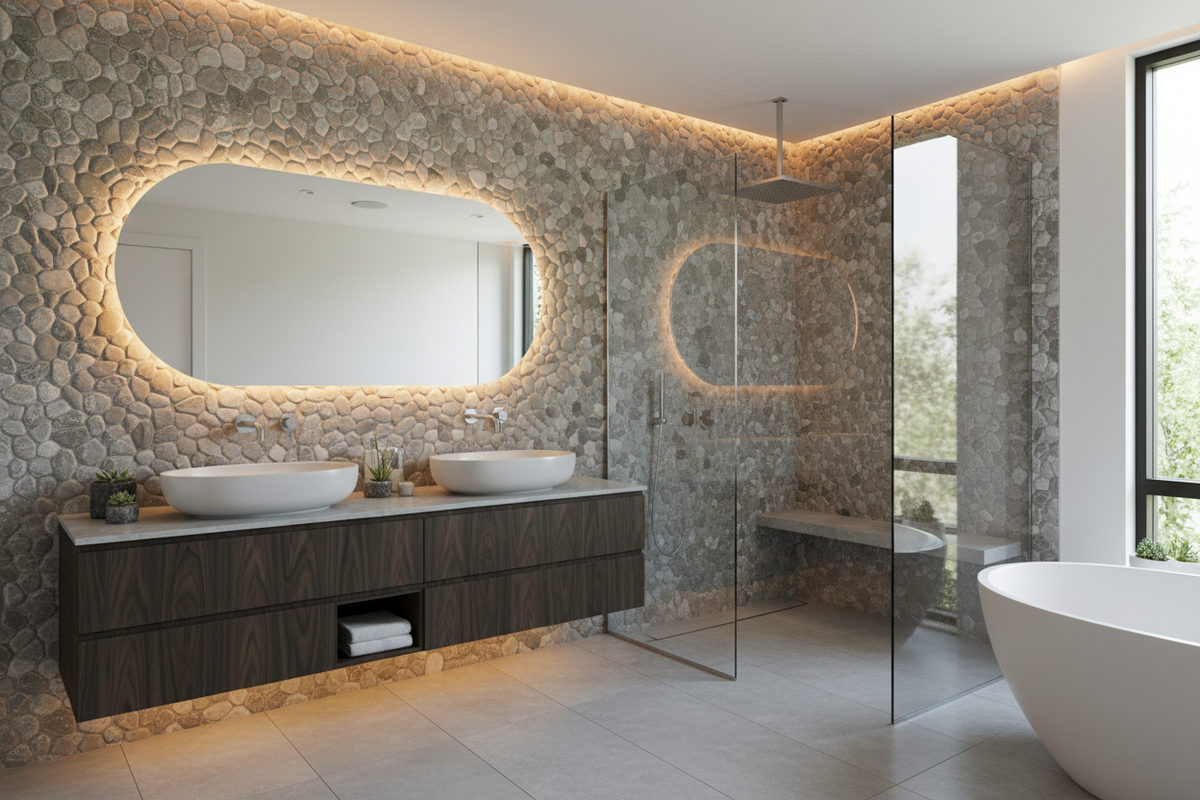
For homeowners who want the authentic look and feel of natural stone — particularly on bathroom walls, shower surrounds, and feature walls — natural stone and natural pebble tile deliver something ceramic cannot replicate: genuine organic character that ages gracefully and adds authentic premium value. For high-traffic floors, practical spaces, and budget renovations, well-chosen ceramic and porcelain tile is entirely respectable and genuinely long-lasting.
9. Ceramic Tile Cost: What to Budget in 2026
Ceramic tile is one of the most budget-flexible flooring and wall materials available. Here's what you can realistically expect to spend in 2026.
Material Cost by Type
| Ceramic Tile Type | Material Cost (per sq ft) | Notes |
|---|---|---|
| Basic glazed ceramic | $1–$5 | Solid colors, standard sizes — budget floor and wall tile |
| Mid-range glazed ceramic | $5–$10 | Better design range, subway styles, patterned options |
| Premium / designer ceramic | $10–$20+ | Artisan, handmade, specialty finishes, large format |
| Unglazed / quarry tile | $2–$8 | Durable, rustic aesthetic; sealing required |
| Mosaic ceramic (mesh-mounted) | $5–$20 | Higher material and labor cost; excellent for accents |
| Porcelain (standard) | $3–$12 | Better performance than ceramic; higher durability |
| Porcelain (large format / premium) | $8–$30 | Designer looks, stone-look printing; pro install required |
Installation (Labor) Cost
According to Angi's 2026 cost data, ceramic tile installation labor runs $3–$15 per square foot nationally, or approximately $60–$120 per hour. The wide range reflects geographic variation, project complexity, tile size (smaller tiles and complex patterns cost more in labor), and substrate condition. In high-cost markets like New York City, San Francisco, and Los Angeles, expect labor at the upper end of this range.
Total All-In Project Costs
| Project | Typical Area | All-In Cost Range (2026) |
|---|---|---|
| Bathroom floor (small) | 30–50 sq ft | $500–$1,800 |
| Bathroom floor (master) | 60–100 sq ft | $900–$3,500 |
| Kitchen backsplash | 15–30 sq ft | $300–$1,200 |
| Shower surround (walls) | 60–80 sq ft | $800–$3,000 |
| Full kitchen floor | 150–200 sq ft | $1,500–$6,000 |
| Full bathroom (floor + walls) | 120–180 sq ft total | $2,000–$7,500 |
📊 Cost Reality: According to HomeAdvisor's 2026 data, the average ceramic tile installation project costs $2,114, with most projects ranging from $400 to $7,000 depending on tile type, project size, and labor. Always order 10–15% more tile than your measured square footage to account for cuts, breakage, and future repairs. Never order the exact square footage — running short mid-project and trying to match a tile from a different production lot is one of the most avoidable renovation headaches.
10. Installation: DIY or Professional?
Ceramic tile is one of the more DIY-accessible home renovation projects — more so than natural stone, and considerably more so than complex hardwood installation. That said, the word "accessible" doesn't mean "simple." A properly tiled floor or wall requires careful planning, precise substrate preparation, and patient execution.
When DIY Is Reasonable
- Small-to-medium standard ceramic tile installations (kitchen backsplash, half-bath floor, laundry room)
- Straight or simple grid patterns using standard-sized tiles
- Homeowners with previous tile experience or willingness to practice cutting techniques
- Non-wet areas where waterproofing requirements are minimal
When Professional Installation Is the Better Choice
- Shower walls and floors — waterproofing membrane installation, slope-to-drain requirements, and wet-area adhesive specifications require experience
- Large-format tiles (18"×18" and above) — substrate must be perfectly flat; lippage is immediately visible
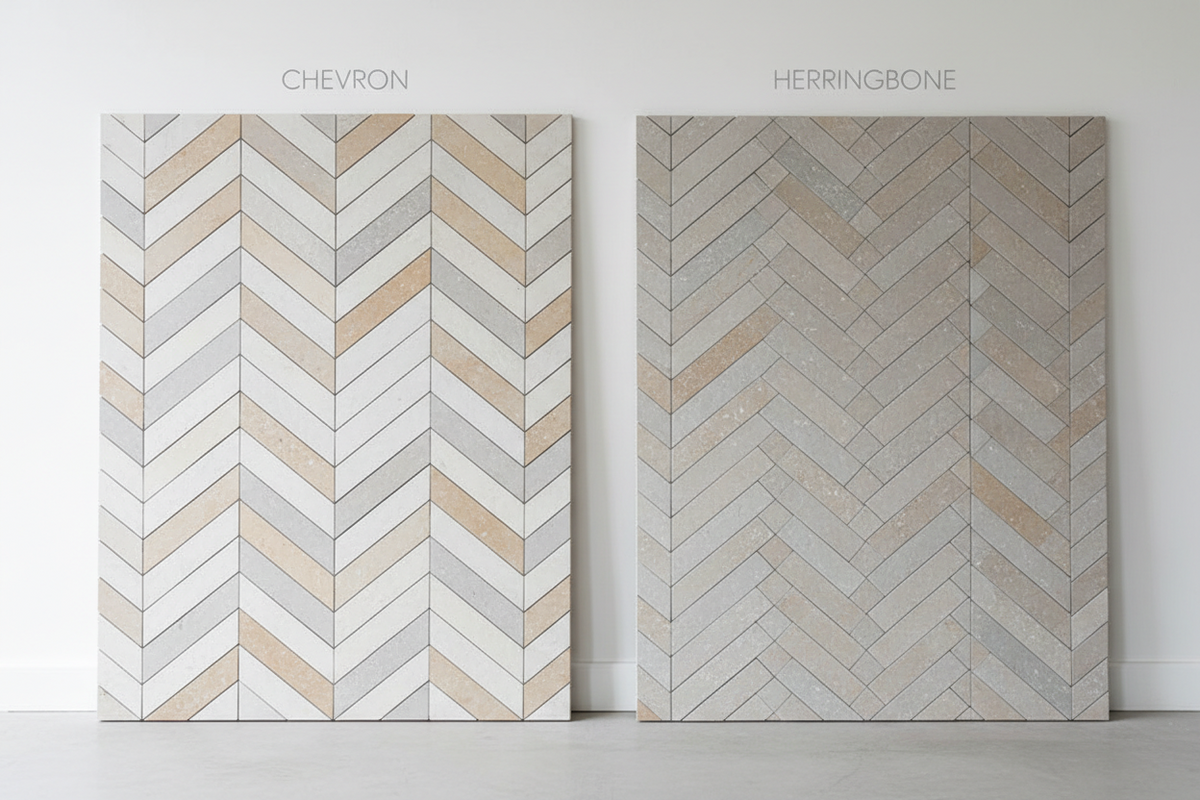
- Complex patterns — herringbone, diagonal, intricate borders — significantly increase cut complexity and waste
- Any space where the substrate needs leveling, repair, or reinforcement before tiling
✔ Pro Tip: Even if you're a capable DIYer, consider hiring a professional for shower wall and floor work specifically. Waterproofing errors in shower installations are the most expensive tile repair scenario — a shower that looked fine on installation day can cause $10,000–$50,000 in structural water damage if waterproofing was inadequate. The cost of professional installation for a single shower ($800–$2,500 in labor) is a small fraction of that risk.
11. How to Clean and Maintain Ceramic Tile
One of ceramic tile's most genuine advantages is its low maintenance requirements — and understanding what those requirements actually are keeps your tile looking great for decades.
Regular Cleaning
Sweep or vacuum ceramic tile floors weekly to remove grit and debris that can scratch the glaze over time. For wet mopping, use warm water with a mild, pH-neutral floor cleaner. Avoid acidic cleaners (vinegar, citrus-based products) on ceramic with certain glazes — while ceramic is more tolerant than natural stone, acidic cleaners can dull glaze finishes over time and damage grout.
Grout Maintenance
Grout is the most maintenance-intensive part of any tiled surface. In wet areas (showers, bathroom floors), grout should be sealed annually with a penetrating grout sealer to prevent moisture absorption and mold growth. In kitchen backsplash applications, sealing grout every 1–2 years is recommended — more frequently near the cooking zone where grease can penetrate unsealed grout. When grout becomes stained despite cleaning, a dedicated grout cleaner or oxygen bleach solution (safe for ceramic tile) used with a stiff grout brush is the most effective remedy. Our full guide to the best grout cleaners covers the top products for different stain types.
What Not to Use on Ceramic Tile
- Steel wool or abrasive scouring pads — scratch the glaze permanently
- Undiluted bleach on colored grout — strips pigment over time
- Oil-based soaps or wax products — leave residue that dulls the glaze
- High-pressure steam on cracked or damaged tiles — forces water behind the tile
Tile Repair
When ceramic tile chips or cracks, individual tile replacement is possible if you have matching spare tiles stored from the original installation (another reason to always order 10–15% overage and store the remainder). If matching tiles aren't available, creative solutions include using a complementary accent tile as a deliberate design feature, or replacing the damaged section with a different tile for a planned patchwork effect.
12. Frequently Asked Questions
What is ceramic tile made of?
Ceramic tile is made primarily from natural clay mixed with other minerals including sand, feldspar, and water. The mixture is formed into tile shapes, dried, coated with a glaze (on most types), and fired in a kiln at high temperatures — typically between 1,900°F and 2,300°F. The firing process chemically transforms the clay into a hard, durable tile body, and fuses the glaze into a waterproof, decorative surface.
Is ceramic tile waterproof?
The glaze on a glazed ceramic tile is waterproof — water cannot penetrate through the glazed surface. However, the clay body beneath the glaze is not waterproof and will absorb moisture if exposed (for example, through a chip or crack in the glaze, or on unglazed tiles). This is why proper waterproofing membranes behind the tile are essential in shower and wet area installations — tile and grout alone are not a waterproofing system, regardless of tile type.
What's the difference between ceramic and porcelain tile?
Both are fired clay-based tiles, but porcelain uses finer, purer clay fired at higher temperatures — producing a denser, harder, and far less porous tile (water absorption below 0.5% vs. up to 3% for ceramic). Porcelain is harder, more durable, frost-resistant, and better suited for high-traffic floors and wet applications. Ceramic is more affordable, easier to cut, and better for walls, backsplashes, and lower-traffic floors. See our full ceramic vs. porcelain tile comparison for complete detail.
How long does ceramic tile last?
With proper installation and basic maintenance, ceramic tile regularly lasts 30–50 years in residential applications. The tile itself rarely fails — most ceramic tile "failures" are actually grout failures, adhesion failures (from poor installation), or substrate problems. Tile that is correctly installed on a sound substrate with proper setting materials can last the lifetime of the building.
Can ceramic tile be used in a shower?
Yes — glazed ceramic is used in showers throughout the US. For shower walls, glazed ceramic performs well when properly installed with a waterproof membrane behind the tile. For shower floors, smaller-format ceramic mosaic tile provides better slip resistance than larger ceramic tiles, but natural pebble tile and purpose-rated textured porcelain are increasingly popular choices for shower floors because of their superior grip and organic aesthetic.
What PEI rating do I need for bathroom floor tile?
The Porcelain Enamel Institute (PEI) rates tile hardness from 1 (decorative only) to 5 (heavy commercial). For bathroom floors in an average home: PEI 3 minimum. For high-traffic master bathrooms: PEI 4. Never use PEI 1 or 2 rated tile on floors — these are wall and decorative tiles only. Always confirm the PEI rating before purchasing floor tile.
Can I install ceramic tile myself?
Yes — ceramic tile is one of the more DIY-accessible renovation projects. Standard ceramic is easier to cut than porcelain, and small-to-medium installations on bathroom and kitchen walls, backsplashes, and non-wet floors are manageable for a careful, prepared DIYer. Shower floor and wall installations require proper waterproofing that most beginners should leave to professionals. A poor waterproofing job in a shower can cause thousands of dollars in structural water damage. For step-by-step guidance on installation, our tile installation tips and ideas guide is a good starting point.
How much does ceramic tile cost installed?
Material costs range from $1 to $20+ per square foot depending on tile type and quality. Installation labor adds $3–$15 per square foot nationally, with the all-in cost for a complete project typically falling between $12 and $45 per square foot according to Angi's 2026 data. A standard bathroom floor (30–50 sq ft) typically costs $500–$1,800 all-in. A kitchen backsplash (15–30 sq ft) runs $300–$1,200. Always get multiple quotes from local tile installers and confirm what is and isn't included in the price.
Is ceramic tile better than natural stone?
Neither is universally "better" — they serve different priorities. Ceramic tile wins on cost, consistency, low maintenance, and practicality. Natural stone wins on authentic beauty, organic uniqueness, home value impact, and the kind of timeless character that no manufactured tile can fully replicate. For high-traffic practical areas and budget-conscious renovations, ceramic and porcelain are excellent choices. For luxury bathrooms, feature walls, and lasting investment, natural stone and natural pebble tile deliver something in a different category entirely.
13. Conclusion: Is Ceramic Tile the Right Choice for Your Project?
Ceramic tile has earned its place as one of America's most trusted building materials for very good reasons. It's durable, genuinely affordable, available in virtually unlimited designs, easy to clean, and long-lasting when properly installed. For bathroom and kitchen walls, backsplashes, laundry room floors, entryways, and countless other practical applications, it's hard to beat the value ceramic tile delivers.
Where it has real limitations — freeze-thaw outdoor applications, continuously wet shower floors in high-moisture situations, spaces where the look of genuine natural material genuinely matters — understanding those limitations and making smarter material selections accordingly is what separates a renovation you'll love from one you'll be rethinking in five years.
The most important takeaway: match the tile type to the application. Glazed ceramic for walls and lower-traffic indoor floors. Porcelain for high-traffic floors, wet zones, and outdoor applications. Natural stone and pebble tile where authentic organic beauty and lasting home value are the priority. Mosaic formats for shower floors and accents. Get those matches right, install on a properly prepared substrate, and your tile will reward you for decades.
If your project calls for natural stone tile or pebble tile — for a bathroom feature wall, a spa-inspired shower surround, or a distinctive shower floor that ceramic simply can't replicate — we'd love to help you find the right material.
At Pebble Tile Shop, we specialize in natural stone tile — river pebble mosaics, flat-sliced stone sheets, marble tile, glass tile, and curated stone collections designed for American bathroom renovations. Every product is vetted for consistent quality, appropriate application performance, and genuine long-term durability. We offer sample ordering so you can see and feel the actual material before committing — because photographs, however good, never fully capture the organic beauty of real stone.
Ready to explore? Browse our full collection at Pebble Tile Shop and request samples for your project.

Leave a comment
This site is protected by hCaptcha and the hCaptcha Privacy Policy and Terms of Service apply.