
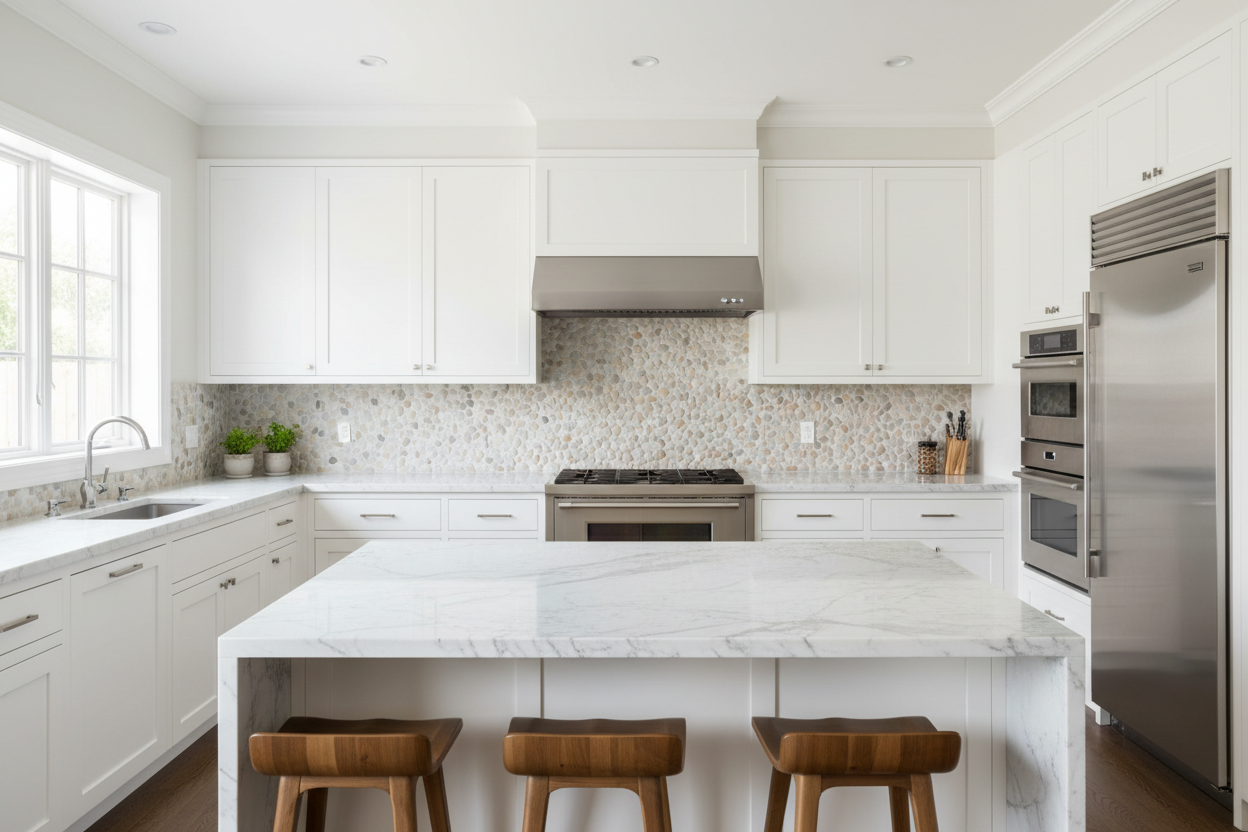
A pebble tile kitchen backsplash brings natural texture, warmth, and artistic character into modern homes. Unlike traditional flat tiles, pebble mosaics add dimension and organic charm, transforming ordinary kitchen walls into visual focal points. This unique look has made pebble backsplashes increasingly popular in contemporary American kitchen design.
At Pebble Tile Shop, homeowners can explore premium pebble tile collections that combine durability, aesthetic appeal, and easy maintenance. From rustic farmhouse kitchens to sleek modern spaces, pebble tiles offer endless design versatility.
In this guide, we explore the pros and cons of pebble tile kitchen backsplashes, along with design ideas, color tips, installation advice, and maintenance best practices to help you make a confident decision.
Why Homeowners Choose Pebble Tiles for Kitchen Backsplashes
Pebble tiles bring both functionality and artistry to kitchen spaces.
Natural Texture in Kitchen Design
Natural textures are trending in kitchen interiors, and pebble tile kitchen walls introduce tactile interest that softens modern cabinetry and sleek countertops. This organic texture enhances warmth while creating a welcoming atmosphere.
In addition, pebble mosaics add depth and variation, making them ideal for homeowners seeking distinctive design elements.
Visual Contrast With Cabinets and Countertops
Pebble tile accent kitchen walls provide striking contrast against smooth cabinets, quartz countertops, and stainless steel appliances. This contrast enhances visual balance and highlights architectural details. By introducing texture, pebble backsplashes prevent kitchens from feeling flat or sterile.
Pros of Pebble Tile Kitchen Backsplashes
Understanding the advantages helps homeowners evaluate design potential.
Unique Appearance and Material Depth
Pebble mosaic backsplash ideas stand out due to their three-dimensional texture and organic patterns. Each installation looks unique, adding artistic depth to kitchen walls.
This material richness elevates kitchen interiors, creating visual interest that flat tiles cannot achieve.
Compatibility With Various Kitchen Styles
Pebble tiles complement many design styles, including rustic, farmhouse, coastal, transitional, and modern kitchens. Their versatility makes them adaptable to both warm and cool color palettes.
From traditional cabinetry to sleek contemporary finishes, pebble tiles integrate seamlessly across styles.
Cons to Consider Before Installing Pebble Tiles
While beautiful, pebble backsplashes require thoughtful planning.
Cleaning and Grout Maintenance
Pebble tile backsplash cleaning can be more involved due to uneven surfaces and deeper grout lines. Grease and food splatter may collect in crevices, requiring regular wiping.
Using proper sealants reduces staining and simplifies long-term maintenance.
Installation Complexity
Pebble tile backsplash installation requires precision and experience. Proper spacing, grout application, and alignment are essential for a clean finish.
Hiring professional installers ensures durability and aesthetic accuracy.
Best Pebble Tile Finishes for Kitchen Walls
Selecting the right finish ensures durability and visual appeal.
Natural pebble tiles suit rustic and farmhouse kitchens beautifully. Their earthy tones and organic textures complement wood cabinetry and stone countertops.
They enhance warmth while creating an inviting atmosphere perfect for cozy kitchen designs.
Polished Pebble Tiles for Modern Kitchens
Polished pebble tiles add sleek sophistication to modern kitchens. Their glossy finish reflects light, making spaces feel brighter and larger.
Explore refined designs in the Polished Pebble Tile Collection to achieve contemporary elegance.
Design Styles That Work Well With Pebble Backsplashes
Pebble tiles adapt effortlessly to various kitchen aesthetics.
Farmhouse and Transitional Kitchens
In farmhouse kitchens, pebble tiles pair well with shaker cabinets, apron sinks, and natural wood accents. Their organic appearance enhances warmth and charm.
Transitional designs benefit from pebble mosaics that balance traditional and modern elements.
Contemporary and Minimalist Layouts
Minimalist kitchens use pebble tiles sparingly, often as accent strips or small focal areas. This approach maintains simplicity while adding subtle texture.
Clean lines combined with organic surfaces create balanced contemporary interiors.
Choosing the Right Color and Pebble Size
Color and scale influence visual impact significantly.
Neutral Tones for Timeless Appeal
Pebble tile neutral backsplash colors, such as beige, gray, and soft white, provide timeless elegance. These hues integrate seamlessly with most cabinetry and countertop finishes.
Neutral palettes support long-term design flexibility.
Mixed Pebble Designs for Character
Mixed pebble color patterns add vibrancy and personality. These designs work well in eclectic kitchens or statement backsplash areas.
Strategic placement prevents overwhelming the space.
Maintenance Tips for Long-Term Performance
Proper care preserves appearance and functionality.
Sealing Pebble Tile Backsplashes
Pebble tile backsplash sealing protects against stains, moisture, and grease buildup. High-quality sealants extend lifespan and simplify cleaning routines.
Annual resealing ensures continued durability.
Everyday Cleaning Best Practices
Daily maintenance involves wiping surfaces with mild, pH-neutral cleaners. Avoid abrasive products that can damage stone finishes.
Routine care prevents residue buildup and preserves natural shine.
Coordinating Pebble Backsplashes With Other Surfaces
Thoughtful coordination enhances overall kitchen design.
Countertop Material Compatibility
Pebble tiles complement granite, quartz, marble, butcher block, and concrete countertops. Their organic texture balances smooth surfaces beautifully.
Selecting harmonious color palettes ensures visual cohesion.
Matching Flooring or Accent Walls
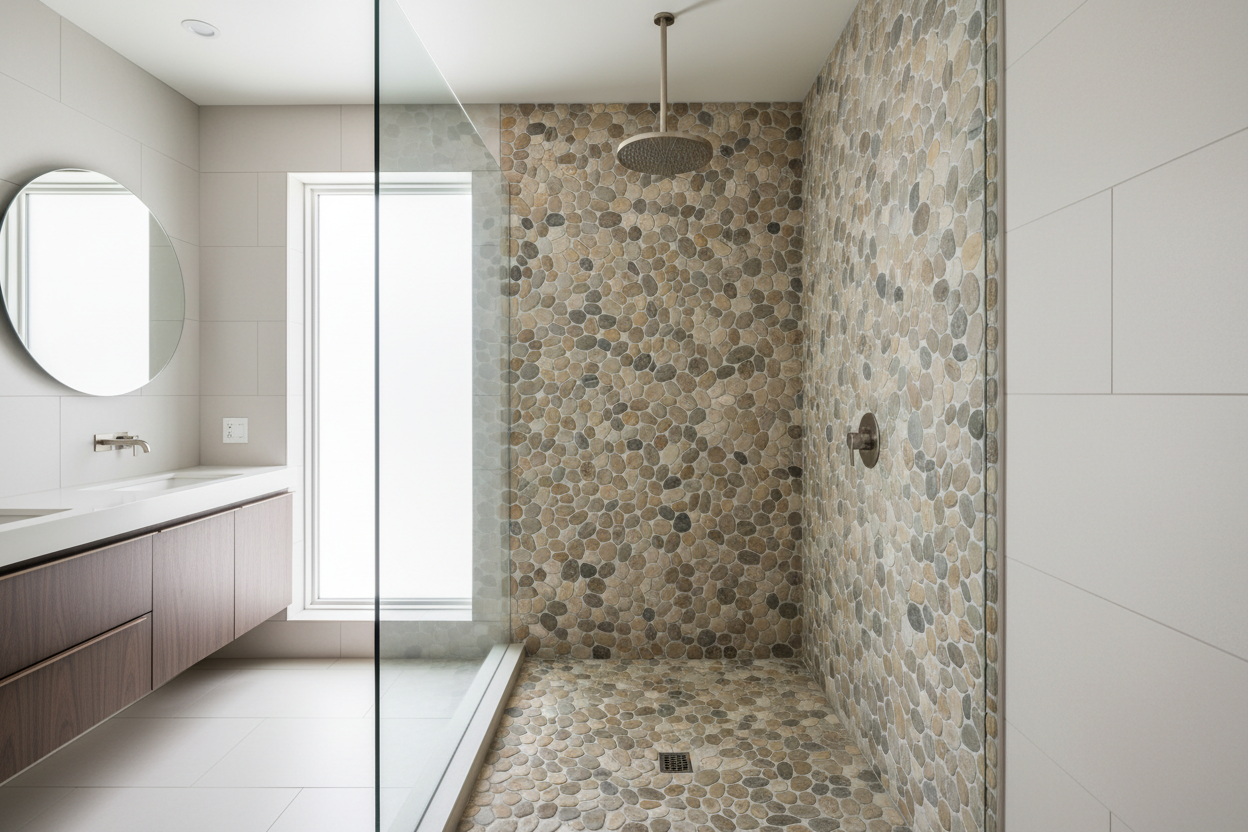
Pebble backsplashes can coordinate with matching flooring or feature walls to unify interior design. This approach creates continuity across connected living spaces.
Consider complementary mosaics from the Stone Mosaic Tile Collection for layered design depth.
Common Mistakes to Avoid
Avoiding design missteps ensures lasting satisfaction.
Using Pebble Tiles Behind Heavy Grease Areas
Direct placement behind stovetops increases cleaning difficulty. Using smooth surfaces in high-grease zones reduces maintenance demands.
Strategic placement preserves both function and appearance.
Ignoring Grout Color Selection
Grout color significantly affects visual outcome. Matching grout tones to pebbles creates seamless blending, while contrasting grout highlights patterns.
Thoughtful selection enhances design cohesion.
Is a Pebble Tile Backsplash Right for Your Kitchen?
Pebble tiles suit many homeowners, but careful consideration is essential.
Ideal Homeowner Profiles
Pebble tile kitchen design USA appeals to homeowners who appreciate natural textures, artisanal finishes, and unique visual character.
Those seeking distinctive design elements will find pebble backsplashes particularly rewarding.
When to Consider Alternative Mosaics
In ultra-modern kitchens, sleek surfaces like glass or subway tiles may better support minimalist aesthetics. Explore options in the Subway Mosaic Tile Collection for contemporary alternatives.
For budget-conscious remodeling, the low-price guarantee ensures competitive value without sacrificing quality.
Conclusion
A pebble tile kitchen backsplash offers a perfect balance of natural beauty, texture, and visual interest. While maintenance and installation require thoughtful planning, the aesthetic rewards are substantial.
From rustic farmhouse charm to sleek modern elegance, pebble backsplashes adapt beautifully across kitchen styles. With proper selection, sealing, and placement, homeowners can enjoy stunning results that elevate both function and design.
Shopping from trusted retailers like Pebble Tile Shop ensures quality craftsmanship, fair pricing, and long-lasting satisfaction for every kitchen project.

Leave a comment
This site is protected by hCaptcha and the hCaptcha Privacy Policy and Terms of Service apply.