

QUICK ANSWER
- Best overall: porcelain — heat-resistant, stain-resistant, no sealing needed
- Best budget option: ceramic — wide color range, moderate daily-use durability
- Best for islands/accents: natural stone — needs regular sealing, big visual payoff
- Best grout for kitchens: epoxy — resists stains and moisture far better than cement grout
- Biggest advantage over quartz/granite: a single cracked tile can be replaced without redoing the whole counter
Tile countertops carry an outdated reputation from wide-grout, porous-stone installations decades ago. Today's materials and techniques make tile a genuinely practical, repairable, design-flexible option, not a compromise. This guide walks through the real decision points: material, cost, installation, maintenance, and the mistakes worth avoiding.
Is Tile Practical for a Kitchen Counter?
Choosing a Material
Porcelain is the default for a heavily used counter: dense, low-absorption, and available in finishes that mimic stone, concrete, or wood.
Ceramic is the budget-friendly route with the widest color range, best suited to moderate daily use. Pair it with darker grout to hide wear over time.
Natural stone — marble, slate, pebble — brings warmth manufactured tile can't match—best on islands and secondary surfaces where its sealing commitment is worth the payoff. See our natural stone cost and care guide for the sealing schedule.
Mosaic / small-format tile enables curved edges and fully custom island shapes, but adds more grout lines to plan around.
Kitchen Counter Ceramic Tile: What to Know
- Typically sized 12" to 18" for countertop use, glazed for stain resistance
- Check the glaze rating, not just color and finish, when comparing products
- Less impact-resistant than porcelain — a dropped cast iron pot is more likely to chip ceramic
- Budget up to porcelain if your kitchen sees heavy daily impact
Tile vs. Quartz, Granite, Laminate, Butcher Block
The pattern worth noticing: quartz and granite handle daily wear beautifully, but a crack usually means professional slab repair or full-section replacement. Tile's individual pieces mean a single damaged tile is a simple swap.
What Does It Cost?
- Ceramic — generally the least expensive material per square foot
- Porcelain — a step above ceramic, still below most natural stone
- Natural stone — typically the highest material cost, plus ongoing sealer
- Labor is usually comparable to or less than slab fabrication, since there's no heavy slab to template
Treat these as planning ranges — actual pricing depends on tile choice, size, edge treatment, and local labor rates.
Countertop Tile Ideas by Look
- Large-format minimalist: 18"+ porcelain, tight color-matched grout — lowest maintenance, cleanest look
- Subway edge detail: a contrasting subway border where counter meets backsplash, without tiling the whole surface
- Herringbone accent island: reserve pattern for one section rather than the whole kitchen — see our herringbone pattern guide
- Stone-look porcelain: travertine or limestone look with zero sealing commitment
- Bold color island: one saturated color on the island, neutral perimeter counter
Edge Profiles
- Bullnose: rounded, soft, comfortable to lean against
- Metal trim: crisp modern line in brushed steel or brass
- Mitered: two pieces meet at 45° for the visual weight of a thick slab — most labor-intensive
How Installation Works
- Build a rigid, level, moisture-resistant substrate (cement backer board)
- Dry-lay tile to plan cuts and center the pattern
- Set tile into appropriate thinset with consistent spacers
- Finish edges with bullnose, metal trim, or a mitered detail
- Grout — epoxy recommended for kitchen counters specifically
- Seal natural stone after grouting (porcelain/ceramic usually don't need it)
Sink and Cooktop Cutouts
- Undermount sinks need a sealed, finished edge and extra bracing beneath the substrate.e
- Cooktop cutouts must match the actual appliance template, not just listed dimensions.ns
- Either feature is a strong reason to hire a professional rather than DIY
Caring for a Tile Countertop
- Wipe daily with a mild, pH-neutral cleaner — skip abrasive pads on glazed surfaces.ces
- Clean up wine, citrus, and oil spills immediately — these stain grout fas.test
- Reseal natural stone and cement grout annually; epoxy grout never needs resealing
- Keep a few spare tiles from the original run for easy, color-matched repairs .later
Mistakes to Avoid
- Using wall-only tile on a counter — it isn't rated for daily wear
- Skipping epoxy grout to save money — cement grout stains far more under kitchen use
- Choosing pattern before function — heavy texture is hard to keep clean on a prep zone
- Letting stone sealing lapse — one missed cycle is often when the first stain sets
- DIY installing without leveling experience — an uneven substrate shows immediately
Preparing for Installation: A Checklist
- Confirm appliance and sink templates before finalizing layout
- Order 10% extra tile for cuts, breakage, and future repairs
- Decide grout color and type before installation day
- Plan plumbing/electrical disconnects in advance if replacing an existing counter
When Tile Isn't the Right Call
Heavy home bakers who roll dough directly on the counter may prefer a slab's perfectly flat surface. Very high-impact kitchens (active families with young kids) may see more chipped edges, though a bullnose edge helps. There's no shame in choosing a slab instead — the goal is the right material for how you actually live.
Backsplash and Countertop Pairing
- Patterned or bold countertop → keep the backsplash quiet and let the counter be the statement.
- Large-format neutral countertop → backsplash has more room for color, pattern, or glass and mosaic.c
- See our kitchen backsplash wall tile guide for more pairing logic
Choosing the Right Tile Size for Your Layout
- Measure your counter run and divide by candidate tile sizes to avoid awkward slivers at the en.ds
- Islands are viewed from multiple sides — center the layout evenly rather than matching the perimeter exactly.tly
- It's fine to use a different tile size on an island than the surrounding counters, as long as material and color family are coordinated.
DIY vs. Hiring a Professional
- Building a truly level, rigid substrate is the hardest part to get right — mistakes here are expensive to fix later.
- Precise cuts around sinks and cooktops require experience most first-time DIYers don't have
- A confident DIYer with tile experience can handle a secondary counter or island.
- A primary counter with a sink or cooktop cutout is usually worth hiring a professional for
Climate and Humidity Considerations
- Humid climates benefit from modified thinset and a strongly water-resistant grout (epoxy again stands out)
- Cement-based grout in a humid kitchen is more prone to gradual moisture absorption ovyearsear.s
- Darker tile and grout near direct sun exposure can run warmer to the touch and, rarely, show minor fading over many yea.rs
Sustainability and Longevity
- Porcelain and ceramic are long-lived materials, often outlasting the cabinetry around t.hem
- Replacing a single tile rather than a whole countertop means less material waste over the life of a kit.chen
- Ask suppliers directly about recycled content or lower-emission manufacturing if sustainability matters to your dec.ision
Real-World Scenarios
- Busy family, cooks daily: large-format porcelain with epoxy grout on the primary counter; save pattern experiments for a small island s.ection
- Loves to entertain: bold stone or patterned island as the centerpiece, quiet porcelain perimeter counter doing the daily work
- Renovating on a budget: ceramic tile in a classic layout, redirecting savings toward better grout and professional installation
Grout Maintenance Schedule for a Kitchen Counter
- Wipe up wine, citrus, tomato, and oil spills the moment you notice them — these stain grout .fastest
- Do a deeper clean with a pH-neutral, grout-safe cleaner weekly if you co.ok often
- Reseal cement grout or natural stone annually, or per your product's recommended interval.
- Epoxy grout skips resealing entirely, which is a real part of its value on this surface
Kitchen Style Pairings
- Modern and minimal: large-format porcelain, neutral tones, matte finish, matching grout color
- Rustic and farmhouse: textured ceramic or stone in warm, earthy tones — imperfection reads as character here
- Coastal and nature-inspired: light, soft-textured tile or pebble-style porcelain; pair real stone or pebble accents with easier-care porcelain on the main prep zone
Two More Questions Worth Answering Upfront
- Can I mix tile materials on one countertop run? Yes, but keep transitions at natural break points, like where an island meets the perimeter counter, rather than mid-run.
- Does tile countertop color fade over time? Glazed porcelain and ceramic resist fading well. Unsealed or under-sealed natural stone is more susceptible to gradual color change from sun and cleaning products.
- Is a tile countertop food-safe for direct prep? Glazed tile is food-safe and easy to sanitize. A cutting board is still recommended to protect knife edges and the tile's glaze, not for food safety reasons.
- Can I add a tile countertop to an existing base cabinet? In most caseesyes— , provided the cabinet is level and structurally sound enough to support the added substrate and tile weig. Confirmve thid before ordering materials.
Frequently Asked Questions
What is the best tile for kitchen countertops?
Porcelain, for its density, heat resistance, stain resistance, and no sealing requirement. Natural stone and ceramic suit accent areas or lighter-use kitchens.
Can I use regular floor or wall tile on a kitchen counter?
Floor-rated tile works well. Wall-only tile isn't recommended—it isn't rated for countertop impact and abrasion.
Are tile countertops hard to maintain?
Glazed porcelain and ceramic are low maintenance. Natural stone needs periodic sealing. A—allle benefits from prompt cleanup of acidic or oily spills.
What grout should I use for a kitchen countertop?
Epoxy grout — it resists staining and moisture far better than standard cement grout under daily kitchen use.
Is stone tile good for a kitchen countertop?
Yes, particularly for islands and accent zones. It requires ongoing sealing, which is the main trade-off compared with porcelain.
Can a cracked or chipped countertop tile be fixed?
Yes. A single damaged tile can usually be replaced without affecting the rest of the counter, unlike a slab material.
How long does a tile kitchen countertop last?
A well-installed porcelain or ceramic counter with properly maintained grout can last well over a decade.
What tile size is best for a kitchen countertop?
Large-format tile (18 inches and up) minimizes grout lines and cleaning on a primary counter. Smaller sizes suit islands, curved edges, or accent sections where more design flexibility matters more than minimal maintenance.
Should the countertop and backsplash tile match?
They don't need to match exactly, but they should be coordinated. If the countertop has a pattern or bold color, keep the backsplash simpler, and vice versa, so the two surfaces support each other rather than compete.
Conclusion
The right countertop tile matches how you actually cook, not just how a showroom sample looks. Porcelain for daily-use durability, ceramic for budget flexibility, stone or mosaic for character and accents — each has a clear place depending on your kitchen and habits. Get the material, grout, and installation right, and tile performs for years while giving design options a slab can't match.
Ready to explore tile options? Pebble Tile Shop carries porcelain, natural stone, and mosaic tile suited to countertops, backsplashes, and islands alike.
Ready to plan your kitchen countertop project? Browse our full tile collection.
Shop Now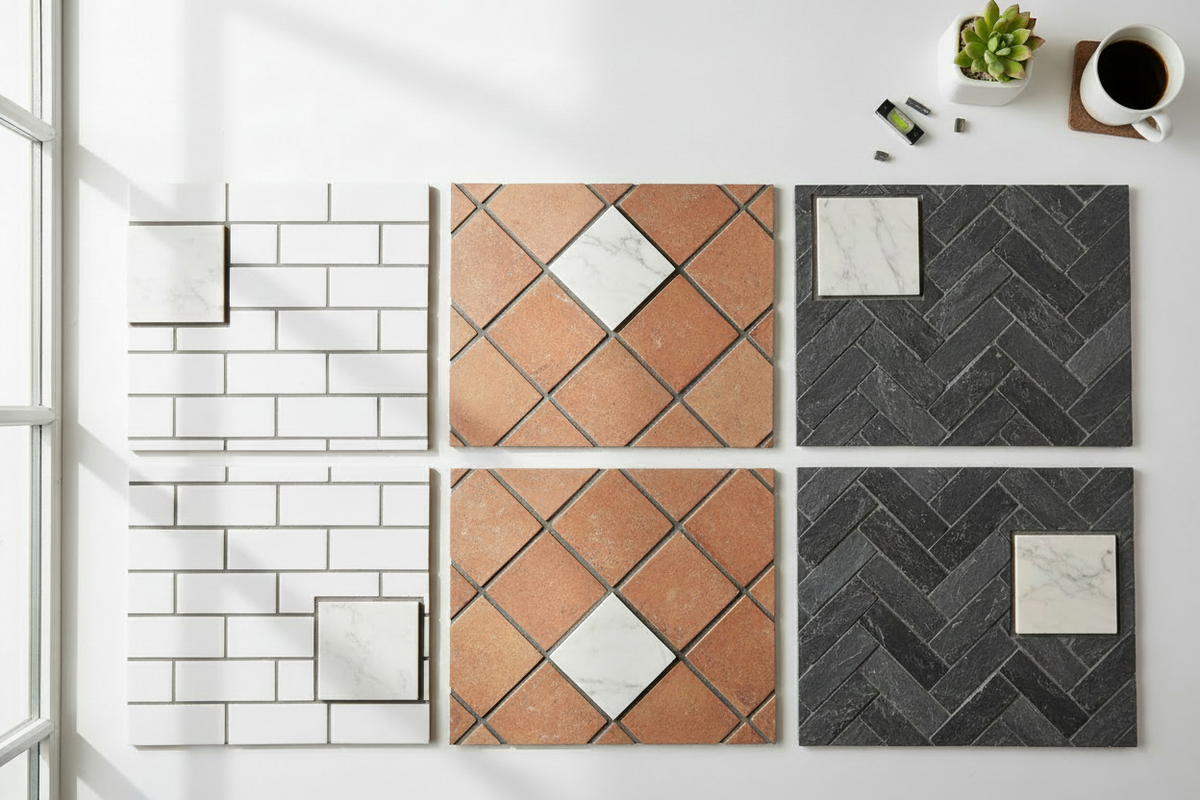


Leave a comment
This site is protected by hCaptcha and the hCaptcha Privacy Policy and Terms of Service apply.