
- What Is a 4x4 Tile?
- Why 4x4 Tiles Remain a Top Choice
- 4x4 Tile Sizes, Coverage & Price Per Box
- 4x4 Shower Floor Tiles: The Complete Guide
- 4x4 Tile Backsplash Patterns
- Practical Uses Beyond the Shower
- Choosing a Material and Finish
- Step-by-Step Installation (10 Steps)
- Common Mistakes to Avoid
- Pro Tips for a Flawless Finish
- Durability and Long-Term Value
- 4x4 Tile vs. Other Sizes
- Where to Buy 4x4 Tiles
- Long-Term Care
- DIY vs. Hiring a Professional
- Design Inspiration
- Frequently Asked Questions
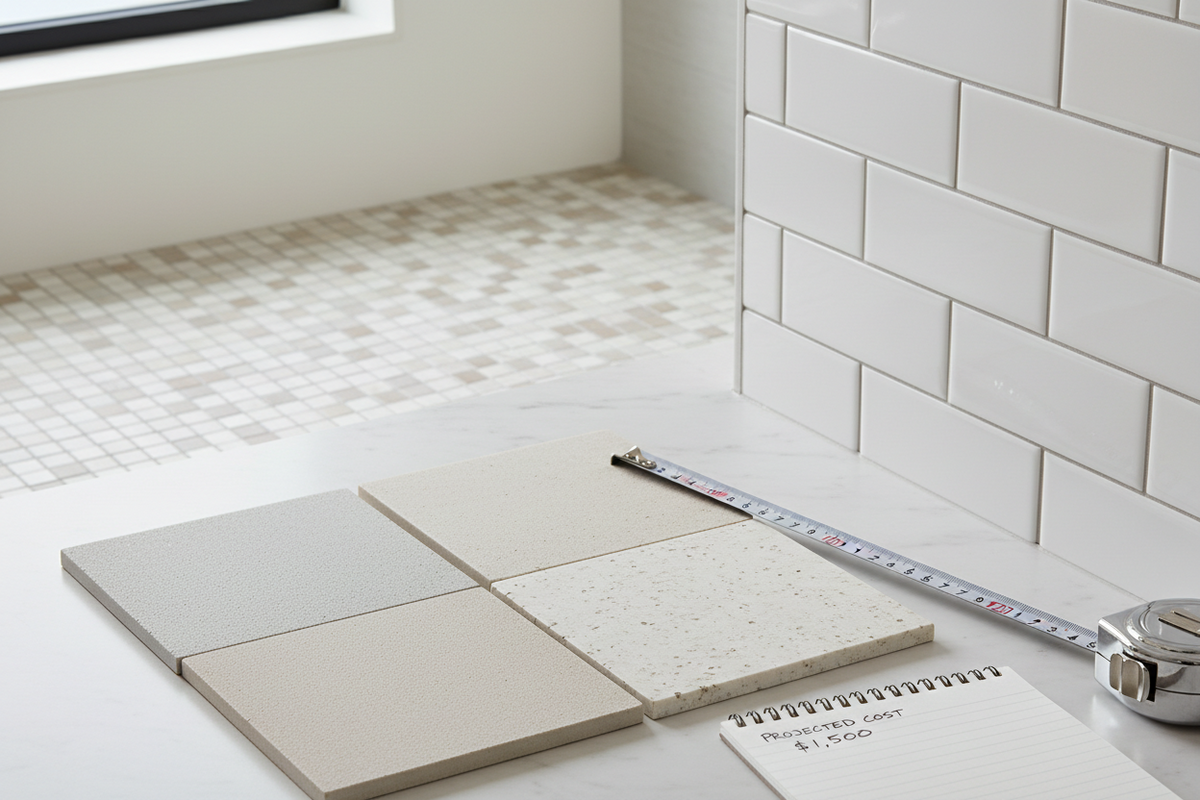
What Is a 4x4 Tile?
A 4x4 tile is exactly what the name says: a square tile measuring 4 inches by 4 inches, one of the oldest and most enduring formats in tile history. Long before large-format porcelain and oversized subway tiles became popular, 4x4 tile was the standard size for kitchens and bathrooms across the country — you'll still find it in original condition in plenty of mid-century homes, which is part of why it reads as both classic and current at the same time.
Today, 4x4 tile is made in ceramic, porcelain, glass, natural stone, and even metal, and it's available in nearly every finish — glossy, matte, textured, and hand-crafted. Its small, symmetrical footprint makes it easier to cut, easier to install, and more forgiving on tight budgets than larger formats, which is exactly why it has held its place in kitchens, bathrooms, and outdoor spaces for decades rather than fading into a retro throwback.
It's also worth noting what 4x4 tile is not: it's a distinct size from the smaller mosaic formats (typically under 2 inches) that are sometimes grouped into the same conversation, and it's distinct from the 3x6 "subway tile" format, even though the two are often installed in similar spaces. Buyers sometimes search "4x4 subway tile," expecting a rectangular tile — true subway tile is rectangular, while 4x4 is square, so it's worth confirming which shape you actually want before ordering, since the search terms overlap more than the products themselves do.
Why 4x4 Tiles Remain a Top Choice
There's a reason 4x4 tile keeps showing up in renovations year after year, from builder-grade remodels to custom high-end builds.
| Quality | Why It Matters |
|---|---|
| Timeless design | The simple square shape blends into traditional and contemporary spaces alike — it hasn't needed a "comeback," because it never really left. |
| Tighter grout lines | Smaller tiles mean more frequent, tighter grout joints — easier to keep clean in constantly wet areas like shower floors. |
| Versatility | Works as flooring, shower floors, backsplashes, accent walls, and outdoor surfaces without switching material families. |
| Ease of installation | Smaller, lighter, and easier to cut than large-format tile — a genuinely approachable DIY project. |
| Value | Typically one of the more budget-friendly formats per square foot, especially in ceramic. |
4x4 Tile Sizes, Coverage & Price Per Box
This is the section most 4x4 tile guides skip, and it's the one buyers actually search for most — "how many tiles per box" and "price per box" are two of the most common questions people ask before ordering.
A true 4x4 tile measures 4" x 4", covering 0.111 square feet per tile (4 x 4 = 16 sq in, divided by 144 sq in per sq ft). Boxes are typically sold by square footage rather than tile count, so the number of individual tiles per box depends on the box's total coverage — commonly somewhere between 4.5 and 12.5 square feet per box depending on the manufacturer and material.
How to calculate how many boxes you need:
- Measure your area — length × width in feet.
- Divide by the coverage-per-box figure listed on the specific product you're ordering.
- Round up to the next full box.
- Add a waste factor — 10% for a simple rectangular floor, 15% for a shower floor with a drain and curves, up to 20% for diagonal or herringbone layouts.
Worked example: A shower floor measures 3 ft × 3 ft = 9 sq ft. If your chosen 4x4 tile covers 9 sq ft per box, that's 1 box exactly — but with a 15% waste factor for the drain slope and curb cuts, you'd need 10.35 sq ft, which rounds up to 2 boxes. It's a small enough gap that most installers round up rather than risk running short mid-project.
On price: 4x4 tile is typically priced per square foot or per box rather than per individual tile, and cost varies significantly by material — ceramic sits at the more affordable end, with porcelain, glass, and natural stone or mosaic finishes priced higher. Because pricing changes with material availability, the most accurate price-per-box figure will always be the one listed on the current product page rather than a general estimate.
To put the math in context: a typical shower floor at 9 square feet, ordered with a 15% waste factor, needs roughly 10.35 square feet of tile — meaning the material cost for the tile itself is often a smaller line item in a shower remodel than most people expect, especially compared to labor, waterproofing membrane, and fixtures. This is one of the reasons 4x4 tile remains such an accessible entry point for a bathroom refresh: even a mid-range material choice keeps total tile cost for a single shower floor relatively contained, since the square footage involved is small.
When comparing price per box across suppliers, make sure you're comparing the same coverage figure — a box priced lower but covering less square footage isn't necessarily the better value once you calculate the true cost per square foot for your project.
4x4 Shower Floor Tiles: The Complete Guide
Shower floors are one of the single biggest use cases for 4x4 tile, and for good reason: the smaller format creates significantly more grout lines than a large-format tile, and every one of those grout lines adds a small amount of texture and grip underfoot on a surface that's wet almost every day. That's the practical trade-off that makes 4x4 tile genuinely well suited to shower floors — not just tradition.
Is 4x4 Tile Good for a Shower Floor?
Yes — 4x4 is one of the most commonly recommended sizes specifically for shower floors, alongside true mosaic (2" or smaller) tile. Because most shower pans are sloped toward a central drain, a smaller tile format like 4x4 can follow that slope with far fewer cuts than a 12x12 or larger tile would need, which also means a cleaner, more watertight installation with less risk of standing water pooling around awkward cuts.
4x4 Tile Shower Floor vs. Mosaic Sheets
True mosaic tile (typically under 2 inches) follows a curved shower pan slightly more precisely than 4x4, since the individual pieces are smaller. In practice, though, 4x4 tile still handles a standard shower pan slope well, and it comes with a real advantage: fewer, larger tiles means fewer overall grout lines to clean and reseal compared to a full mosaic floor — a meaningful difference in long-term maintenance.
4x4 Subway Tile Shower Ideas
Square 4x4 tile pairs naturally with 4x4 or larger subway-style wall tile for a cohesive, classic shower design — matching the floor grout pattern to the wall layout (running bond or stacked) creates a shower that reads as intentional rather than mismatched. A popular approach: 4x4 square tile on the floor in a grid pattern, with rectangular subway tile on the walls in a running bond, tied together with a matching or complementary grout color.
4x4 Walk-In Shower Layouts
For a curbless or walk-in shower, 4x4 tile on the floor is often extended a few inches beyond the shower threshold into the surrounding bathroom floor, visually expanding the space and eliminating a hard transition line. This is a layout worth planning with your installer before tile is ordered, since it changes your total square footage and where the waterproofing membrane needs to extend.
Slip Resistance on 4x4 Shower Floors
If slip resistance is a priority — for a household with kids or older adults — look specifically for a matte or textured finish rather than a glossy one, and consider a mosaic or pebble accent strip near the entry point where feet first hit the wet floor. Glossy 4x4 tile looks polished but can be noticeably more slippery than a matte or textured equivalent.
4x4 Tile Shower Floor Color and Grout Choices
Because a shower floor is a relatively small, contained area, it's one of the more forgiving places to experiment with a bolder tile color than you might choose for a full room — a deep charcoal or navy 4x4 floor paired with white walls and grout creates real visual contrast without overwhelming the space. On grout color specifically, darker grout on a shower floor hides soap scum, hair, and mineral buildup far better than white or light grey grout, which is worth factoring in regardless of which tile color you land on, simply because it changes how often the floor needs deep cleaning to look fresh.
Combining 4x4 Floor Tile With Larger Wall Tile
One of the most common and most successful shower designs pairs 4x4 tile on the floor with a larger-format tile — 12x24 or even 12x12 — on the walls. The smaller floor tile handles the functional job of following the pan's slope and adding grip, while the larger wall tile minimizes grout lines on vertical surfaces where slip resistance isn't a factor, keeping the overall shower easier to clean without sacrificing the practical benefits of 4x4 where it matters most.
4x4 Tile Backsplash Patterns
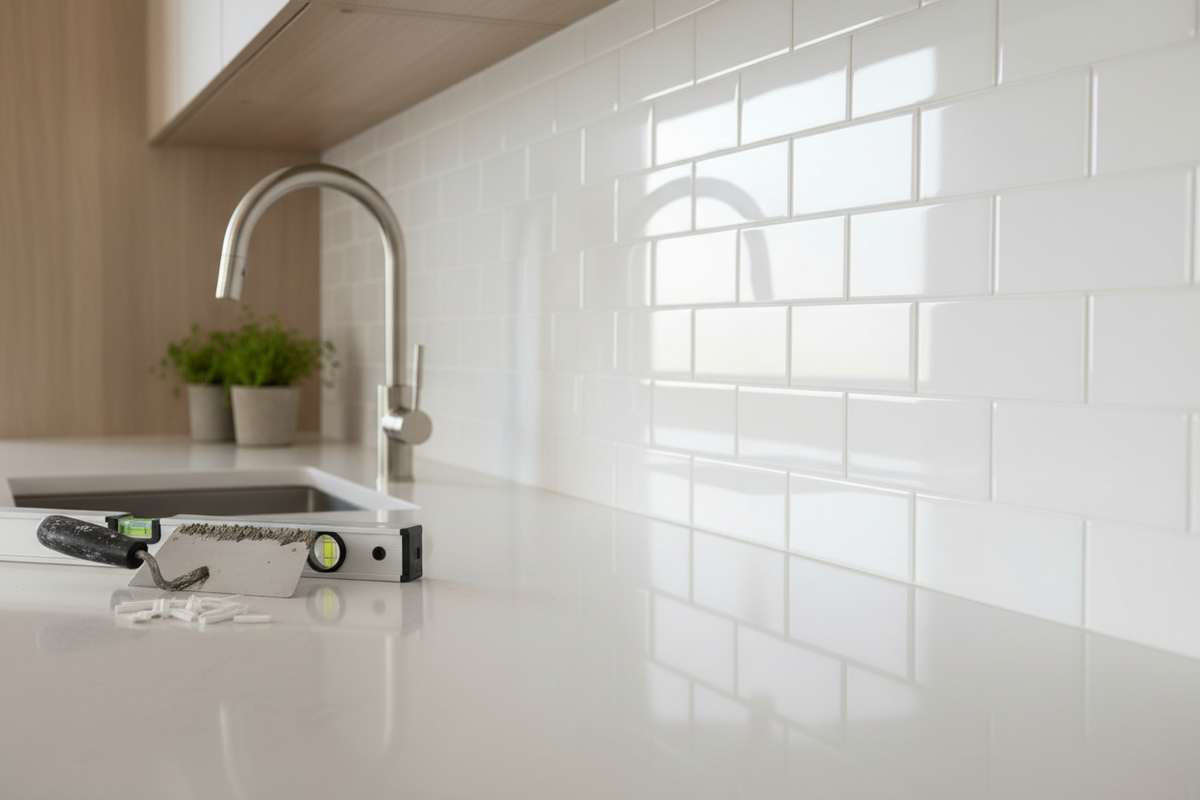
A 4x4 tile backsplash is one of the most affordable, highest-impact upgrades in a kitchen — small enough in scope to be a weekend project, but visible enough to change the entire feel of the room. The pattern you choose does most of the visual work, so it's worth understanding the options before you buy.
| Pattern | Look & Effort Level |
|---|---|
| Grid (stacked) | Clean, modern, tiles aligned directly on top of one another. Easiest layout to plan and install. |
| Running bond (offset) | Half-offset brick pattern — the traditional subway look, adapted to a square tile. Easy to install. |
| Diagonal (on-point) | 45-degree rotation for a more dynamic look. More cuts at the edges, moderately more labor. |
| Herringbone | Striking, detailed zigzag — typically needs a rectangular cut of the square tile, or a dedicated herringbone-format tile. More labor-intensive. |
| Basket weave | Alternating horizontal/vertical pairs for a woven look — often used as a framed accent rather than the full backsplash. |
Beyond the pattern itself, three choices shape the final look: grout color (matching for a seamless, low-contrast look; contrasting for graphic punch), finish (glossy reflects more light in a windowless kitchen; matte hides grease splatter better), and edge treatment (bullnose or metal trim for a finished edge where the tile meets an open wall). Sketch your wall with dimensions and outlet locations before ordering — it's the single step that prevents the most mid-install surprises.
Practical Uses Beyond the Shower
While shower floors get the most search attention, 4x4 tile earns its place in plenty of other rooms too — its small scale makes it genuinely useful anywhere precision matters more than speed of coverage.
Bathroom Walls
Beyond the shower, 4x4 tile works well as a vanity backsplash or a half-wall wainscot treatment, especially in older or smaller bathrooms where a large-format tile would feel out of scale. Pairing it with a larger tile elsewhere in the same room — say, 4x4 as a border band with 12x12 as the main wall field — keeps the room from feeling visually busy while still using the smaller tile intentionally.
Accent and Feature Walls
A 4x4 tile accent wall — behind a fireplace, in an entryway, or along a hallway — is one of the lower-cost ways to add real texture and visual interest to a room. Because the format is small, a mixed-color or patterned 4x4 layout on a single wall reads as a deliberate design choice rather than an overwhelming one, which is harder to pull off at a larger tile scale.
Flooring in Smaller Rooms
4x4 tile isn't the most common choice for large open floors, but it performs well in laundry rooms, mudrooms, and powder rooms — spaces where a more detailed, custom-feeling floor pattern is worth the extra grout lines, and where the smaller room size means the additional install time is manageable.
Outdoor Patios and Pool Surrounds
Outdoor spaces can benefit from 4x4 tile as well, provided you choose a weather-resistant material — porcelain or natural stone rated for exterior and freeze-thaw use, not standard interior ceramic. The smaller format is well suited to detailed, decorative installations around a pool edge or patio border, where a mix of colors or a mosaic-style layout can enhance the space without the cost of covering the entire area in natural stone.
| Application | Design Tip |
|---|---|
| Bathroom walls | Combine 4x4 with a larger 6x6 or 12x12 tile — use the 4x4 as a border or accent band around the shower or vanity. |
| Accent walls | Mix 4x4 with a larger, contrasting-color tile around a fireplace or hallway for an eye-catching feature. |
| Flooring (laundry, mudrooms) | Lay in a grid for a clean look, or diagonal/herringbone for a more custom feel in smaller rooms. |
| Outdoor patios | Choose weather-resistant porcelain or stone; mix colors or patterns for a mosaic-style patio effect. |
Choosing a Material and Finish
Material choice affects cost, water resistance, and maintenance more than almost any other decision in a 4x4 tile project, so it's worth weighing against where the tile is actually going rather than picking on look alone.
Ceramic is the most budget-friendly and widely available option, well suited to walls and backsplashes. It's easy to cut and install but generally less water- and impact-resistant than porcelain, so it's a stronger fit for vertical, drier applications than for shower floors.
Porcelain is denser, less porous, and more water- and wear-resistant than ceramic, making it a stronger choice for floors and shower floors specifically. It costs more than ceramic but holds up better to years of daily water exposure, which often makes it the better long-term value for wet areas even at a higher upfront price.
Glass tile brings shine and light reflection, and it's a popular backsplash choice because it visually brightens a kitchen. It's less common for floors, since glass surfaces tend to be more slippery and can show scratches over time from foot traffic.
Natural stone and mosaic finishes — including 4x4-format stone and pebble blends — bring texture and a more organic, high-end look. They come at a higher price point and require periodic sealing to protect the porous stone surface, but many buyers find the natural variation and texture worth the extra maintenance, particularly on a shower floor where that texture also improves grip.
Metal tile (typically a metal-look laminate over a ceramic or resin base) is less common but shows up as an accent — a metallic 4x4 tile border or inset can add a subtle glint to an otherwise matte tile field, most often used sparingly as a border or occasional accent rather than across a full surface.
Step-by-Step Installation (10 Steps)
| Materials | Tools |
|---|---|
| 4x4 tile (+10–15% extra) Thin-set mortar Tile spacers Sanded or unsanded grout Grout sealer Waterproofing membrane (wet areas) |
Notched trowel Tile cutter or wet saw Rubber grout float Sponges and bucket Level Chalk line |
- Prep the surface. Clean, dry, and free of dust or debris so adhesive bonds properly.
- Measure and mark. Find your starting point and center lines before laying a single tile.
- Dry-lay a section. Confirm your pattern and cut lines before adhesive goes down.
- Apply adhesive. Spread thin-set with a notched trowel in small sections to avoid it drying out.
- Set the tiles. Start from the center and work outward, using spacers for even, consistent gaps.
- Check for level. Use a level or straightedge across several tiles as you go — small lippage adds up fast at this scale.
- Cut tiles as needed. Use a tile cutter or wet saw for edges, corners, and fixtures.
- Let the adhesive cure. Follow the manufacturer's cure time before grouting — don't rush this step.
- Grout the tiles. Apply with a grout float, working diagonally across joints, and wipe excess before it hardens.
- Clean and seal. Once grout has set, clean the surface and apply a grout sealer to protect against moisture and stains.
Common Mistakes to Avoid
Most 4x4 tile projects go wrong in the planning stage rather than the installation itself — these are the errors worth catching before adhesive ever touches the wall or floor.
- Ordering the exact square footage with no waste factor — the most common reason people run short mid-project, and the hardest to fix cleanly once a room is already tiled.
- Using glossy tile on a shower floor — looks great in photos, but noticeably more slippery than matte or textured finishes, and harder to walk on safely once soap or shampoo residue builds up.
- Skipping the layout sketch — outlets, fixtures, and cut lines are far easier to plan on paper than mid-install, and a sketch also makes your waste-factor calculation more accurate.
- Rushing the cure time before grouting — can weaken the bond and cause tiles to shift or crack under foot traffic later.
- Choosing ceramic for a shower floor — porcelain or stone typically holds up better to constant water exposure over time, and the price difference is often smaller than people assume given how little total square footage a shower floor requires.
- Ignoring the drain slope during layout — dry-laying tiles without accounting for the pan's slope toward the drain can leave you with uneven cuts and awkward grout lines right where they're most visible.
- Mixing tile from different production batches without checking — even the same product name and color can shift subtly between manufacturing runs, which shows up clearly once tiles are side by side.
Pro Tips for a Flawless Finish
- Order all boxes for one room from the same batch or dye lot to avoid subtle color shifts.
- Use a grout color close to the tile shade for a seamless look, or a contrasting shade to highlight the grid pattern intentionally.
- On shower floors, slope grout joints slightly toward the drain during installation to help water run off rather than pool.
- Reseal grout annually in wet areas to prevent staining and mildew, especially with lighter grout colors.
- Dry-fit a full row before committing to adhesive, especially in a diagonal or herringbone layout where small spacing errors compound quickly across a wall or floor.
- Keep a small stash of leftover tile and grout after the project is finished — it's the easiest way to handle a future repair without hunting down a discontinued dye lot.
Durability and Long-Term Value
One of the underrated advantages of 4x4 tile — particularly porcelain and natural stone — is how well it holds its value over the life of a home. Unlike finishes that need periodic refinishing or replacement, a well-installed tile floor or shower typically lasts decades with only routine grout maintenance, which makes the upfront cost easier to justify against the long stretch of time you'll actually be using it.
This durability also plays into resale conversations: a tiled shower floor in solid, well-maintained condition is generally viewed as a neutral, move-in-ready feature by buyers, rather than something that needs to be budgeted for replacement — which isn't always true of newer, less-tested surface materials.
4x4 Tile vs. Other Sizes
Tile size isn't just an aesthetic choice — it directly affects how well a tile handles curves, how many grout lines you'll be cleaning, and how forgiving the layout is around fixtures and drains. Here's how 4x4 stacks up against the sizes buyers most often compare it to.
| Size | How It Compares to 4x4 |
|---|---|
| Mosaic (under 2") | Follows curved shower pans slightly better, but far more grout lines to clean and reseal. |
| 3x6 subway | Similar affordability and classic appeal; rectangular shape suits walls better than sloped shower floors. |
| 6x6 | Fewer grout lines and faster install, but less flexible around drains and tight curves than 4x4. |
| 12x12 and larger | Best for open floors with few cuts; a poor fit for shower pans and tight, detailed spaces where 4x4 excels. |
A Quick Terminology Cheat Sheet
A few terms come up often when shopping for 4x4 tile and are worth knowing before you order: bullnose refers to a tile with one rounded, finished edge, used to cap an exposed edge cleanly without needing metal trim. Listello is a decorative border or accent strip, often used to break up a field of plain 4x4 tile. Sheet-mounted describes small-format or mosaic tile pre-attached to a mesh backing for faster installation — less common for standard 4x4 but common for the mosaic and pebble accents often paired with it. Field tile simply means the main tile covering most of the surface, as opposed to a border or accent tile.
Where to Buy 4x4 Tiles
If you're ready to buy 4x4 tile, it's worth choosing a supplier that offers real variety across materials and finishes, along with a knowledgeable team who can help you match the right tile to your specific project — a shower floor has different requirements than a kitchen backsplash, and a good supplier should be able to walk you through that difference rather than just listing SKUs.
Pebble Tile Shop carries a wide selection of 4x4 tile in ceramic, porcelain, and stone mosaic finishes, with free shipping on every order — including samples, which makes it easy to check color and texture in your own space before committing to a full project. Tile Hub, a sister company to Pebble Tile Shop, offers an additional range of 4x4 tile for both residential and commercial projects.
Long-Term Care
How well a 4x4 tile installation ages has less to do with the tile itself — natural stone and quality porcelain are genuinely durable materials — and more to do with how consistently the grout is cared for, since grout is the more porous, more vulnerable part of the surface.
- Clean regularly with a mild detergent and warm water — avoid harsh chemicals that can dull the surface or degrade grout.
- Reseal grout periodically, especially in showers, to prevent staining and moisture buildup — most sealers need reapplication roughly once a year in high-moisture areas.
- Use soft cloths or sponges rather than abrasive scrubbers to avoid scratching glossy finishes.
- Squeegee shower floors after use in hard water areas — this single habit meaningfully reduces mineral buildup and how often a deep clean is needed.
- Address cracked or missing grout promptly — a small gap left unaddressed lets water reach the substrate underneath, which is a far more expensive repair than a quick regrouting job.
DIY vs. Hiring a Professional
4x4 tile is genuinely one of the more approachable DIY tile projects, thanks to its small, easy-to-cut format. Where professional help pays off most is waterproofing prep in shower floors — an improperly waterproofed shower pan causes problems well beyond the tile itself, so that's the step worth hiring out if you're not confident in it.
A reasonable middle ground many homeowners take: hire a professional for the waterproofing membrane and pan slope (the parts where a mistake is expensive and hard to detect until it's too late), then handle the tile setting and grouting yourself once that foundation is in place. This splits the project's highest-risk step from its most time-consuming one, keeping labor costs down without taking on the part of the job that's genuinely difficult to correct after the fact. If you do hire a professional for the full job, ask specifically about their experience with small-format tile on sloped shower pans — the skill set for laying large-format floor tile doesn't always transfer directly to the tighter cuts and slope work a 4x4 shower floor requires.
Design Inspiration
4x4 tile has stayed relevant through decades of design trend cycles because it functions as a foundation rather than a statement — it pairs naturally with whatever larger design choice defines the room, from a bold accent wall to a classic subway-tiled shower. That flexibility is exactly why it shows up as often in fresh, current renovations as it does in untouched mid-century originals.
A few directions worth considering if you're still narrowing down a look:
- Coastal / spa bathroom: soft white or sea-glass green 4x4 tile on the shower floor, paired with natural wood accents and a matte finish throughout.
- Modern monochrome: matte black or deep charcoal 4x4 floor tile with white walls and dark grout, for a high-contrast, contemporary look.
- Vintage-inspired kitchen: classic white 4x4 backsplash in a grid or running-bond pattern with colored grout — a nod to the original mid-century use of this exact tile size.
- Warm, earthy retreat: terracotta or warm tan 4x4 tile with a slightly textured, handmade-look finish for a room that feels grounded rather than clinical.
Whatever direction you choose, the small scale of a 4x4 tile means color and pattern decisions are lower-risk than they'd be with a large-format tile — a bold choice covers less total visual area, and if you're testing a look in a single space like a shower floor, it's a relatively contained commitment compared to tiling an entire open-concept floor.
Frequently Asked Questions
Is 4x4 tile good for a shower floor?
Yes. The smaller format follows a shower pan's slope toward the drain with fewer cuts than larger tile, and the more frequent grout lines add texture and grip on a surface that's wet daily.
How many 4x4 tiles are in a box?
It depends on the box's total coverage, which varies by manufacturer and material — commonly between roughly 40 and 110 individual tiles per box. Check the square-footage-per-box figure on the specific product rather than assuming a standard count.
What is the price per box for 4x4 tile?
Price per box depends heavily on material — ceramic is generally the most affordable, with porcelain, glass, and natural stone priced higher. The current price on the specific product listing will always be more accurate than a general estimate.
What's the best 4x4 tile for a shower floor?
Porcelain or natural stone in a matte or textured finish generally outperforms glossy ceramic on a shower floor, both for water resistance and slip resistance.
Can 4x4 tile be used for a backsplash?
Yes — it's one of the most popular backsplash sizes, especially in a grid, running-bond, or herringbone pattern, and its small size makes it easy to fit into the narrow space between countertop and cabinets.
How much waste factor should I add when ordering 4x4 tile?
Around 10% for a simple, mostly-square area; 15% for a shower floor with a drain and curved cuts; up to 20% for diagonal or herringbone layouts.
Is 4x4 tile out of style?
No — it's one of the more consistently used tile sizes precisely because it functions as a neutral, foundational choice rather than a trend-driven one, and it continues to appear in both classic and contemporary designs.
What size grout line should I use with 4x4 tile?
A common range is 1/8" to 3/16" for a classic grid look; consult your specific tile manufacturer's spacing recommendation, since exact spacing can vary by product.
Can I use 4x4 tile in a walk-in shower with no curb?
Yes — 4x4 tile on the shower floor is often extended a few inches past the threshold into the surrounding bathroom floor to create a seamless, curbless transition. Plan this with your installer before ordering, since it affects both your total square footage and where waterproofing needs to extend.
What's the difference between 4x4 tile and 4x4 accent tile?
Standard 4x4 tile is a field tile meant to cover a full surface, while "4x4 accent tile" typically refers to a decorative, textured, or patterned 4x4 tile used sparingly — as a border, inset, or focal point — rather than across an entire wall or floor.
Do 4x4 tiles work well for a small bathroom floor?
Yes — the tighter grid of grout lines can actually help ground a small space, and the size makes it easier to work around toilets, vanities, and other fixtures with fewer awkward cuts than a larger-format tile would require.
How do I clean soap scum off a 4x4 shower floor tile?
A stone- or tile-safe cleaner and a soft-bristle brush, worked into the grout lines and low points around each tile, handles most soap scum buildup. Squeegeeing after each shower and choosing a darker grout color both reduce how often this deep clean is needed in the first place.
For high-quality 4x4 tile in ceramic, porcelain, and stone mosaic finishes, Pebble Tile Shop offers a wide selection with expert guidance to help you choose the right tile for your shower floor, backsplash, or next project — with free shipping on every order, including samples.

Leave a comment
This site is protected by hCaptcha and the hCaptcha Privacy Policy and Terms of Service apply.