
By Pebble Tile Shop · August 2025 · 18 min read
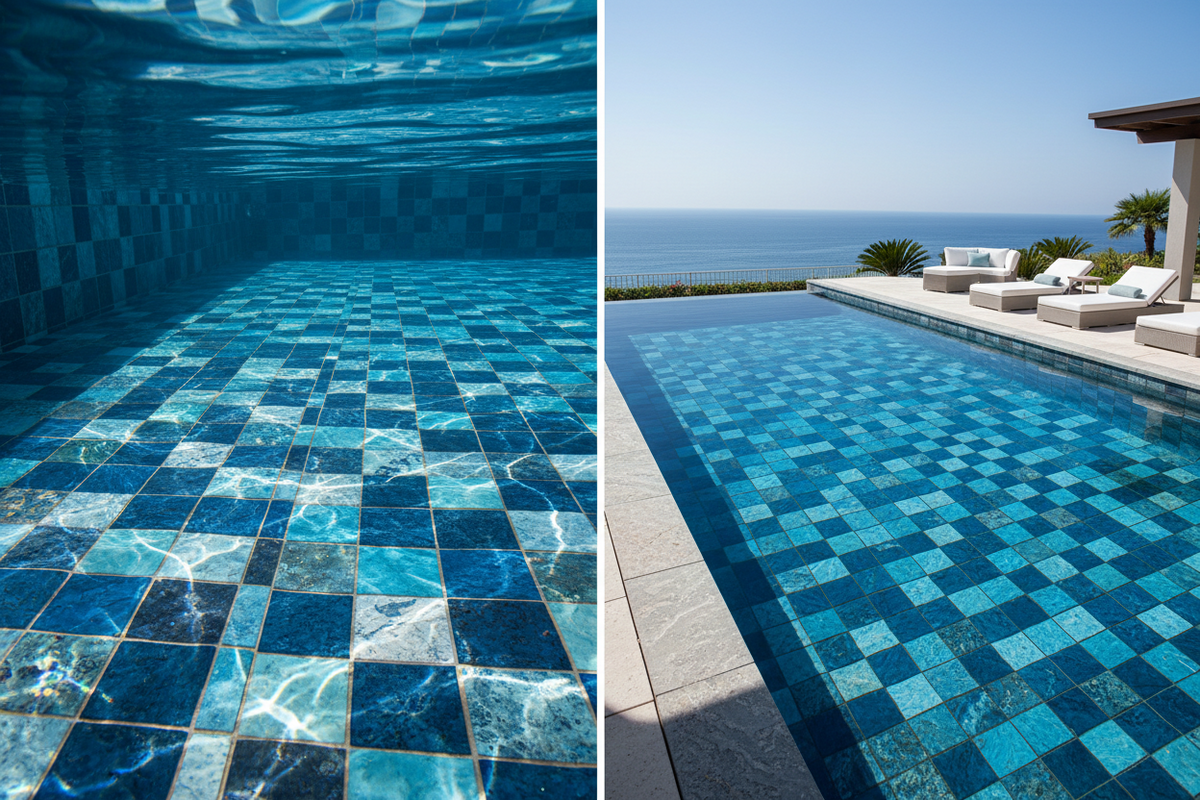
6x6 pool tiles are one of the most popular tile sizes for swimming pools across the US, used on waterlines, pool walls, pool floors, and pool decks. But choosing the right 6x6 pool tile involves more than picking a color you like. Material, finish, slip resistance, chemical resistance, and how the tile performs at the waterline all matter as much as aesthetics. This complete guide covers everything you need to make the right choice for your pool project.
WHAT THIS GUIDE COVERS
- Why 6x6 is the most popular pool tile size
- Best materials for 6x6 pool tiles
- How to choose pool tile color
- Best color for pool waterline tile
- 6x6 pool tile texture and finish options
- 6x6 waterline pool tile design ideas
- 6x6 pool deck tile considerations
- How to choose pool tile that lasts
Why 6x6 Pool Tiles Are the Most Popular Choice
A 6x6 inch pool tile measures six inches on each side, making it a medium-format square tile that sits between smaller mosaic tile formats and larger format tiles. This size has become the standard for pool waterline tile across the US for practical reasons that go beyond aesthetics.
Coverage and installation efficiency
6x6 pool tiles cover more surface area per piece than smaller mosaic tile formats, which means fewer individual tiles to set, fewer grout lines to fill, and faster installation across large pool surfaces. Compared to 4x4 pool tiles, a 6x6 format reduces the number of pieces needed by approximately 44 percent for the same surface area.
Fewer grout lines mean easier maintenance
Every grout line in a pool is a potential site for algae growth, mineral deposit accumulation, and staining. 6x6 pool tiles have significantly fewer grout lines per square foot than smaller tile formats, which reduces the maintenance burden over the life of the pool. This is particularly important at the waterline where calcium scaling and algae growth are most concentrated.
Versatility across pool zones
6x6 pool tiles work effectively across multiple zones of a swimming pool, including the waterline, pool walls, pool steps, raised bond beams, and pool coping transitions. Their square format is neutral enough to work with most pool shapes and compatible with most pool decking materials.
PRO TIP
The waterline is the most important zone to tile correctly in any pool. This is where sunscreen, body oils, calcium deposits, and algae concentrate most heavily. Choose your 6x6 waterline pool tile for chemical resistance and ease of cleaning first, and aesthetics second.
Best Materials for 6x6 Pool Tiles
Material is the most important decision when choosing 6x6 pool tiles. Each material has different performance characteristics in a pool environment, and the right choice depends on where the tile will be installed and what your priorities are.
| Material | Best for | Slip resistance | Price range |
|---|---|---|---|
| Porcelain | Waterline, walls, floors, decks | High (textured) | $3 to $15 per sq ft |
| Ceramic | Waterline and walls | Moderate | $2 to $8 per sq ft |
| Glass | Waterline, walls, accents | Low (slippery) | $8 to $30 per sq ft |
| Natural stone | Pool decks and surrounds | High (textured) | $5 to $25 per sq ft |
| Pebble tile | Pool surrounds and water features | Very high (natural) | $8 to $20 per sq ft |
Porcelain 6x6 pool tiles
Porcelain is the most widely recommended material for 6x6 pool tiles. It is denser than ceramic, absorbs less than 0.5 percent moisture by weight (compared to ceramic at up to 3 percent), and is more resistant to pool chemicals, UV fading, and freeze-thaw cycles. Textured porcelain pool tile provides a coefficient of friction above 0.6, meeting the standard for slip resistance in wet areas. For most residential pools, porcelain is the best balance of performance, durability, and value.
Ceramic 6x6 pool tiles
Ceramic 6x6 pool tiles are more affordable than porcelain and work well in waterline applications where they are not submerged full time. They are less dense than porcelain, which means they are slightly more vulnerable to water absorption over time and less suitable for pool floors or areas with frequent freeze-thaw exposure. For warmer climates where freeze-thaw is not a concern, ceramic is a practical and budget-friendly choice for pool waterlines.
Glass 6x6 pool tiles
Glass 6x6 pool tiles are the most visually striking option, reflecting light through the water and creating the vibrant, shimmering appearance common in luxury pools and resort designs. Glass is non-porous, completely resistant to pool chemicals, and does not fade over time. The primary limitation is that glossy glass tile is slippery when wet, making it unsuitable for pool floors or steps. Glass 6x6 pool tiles perform best at the waterline and on pool walls where slip resistance is not required.
Never install glossy glass or polished porcelain 6x6 tiles on pool floors or steps. These surfaces become dangerously slippery when wet. For submerged or frequently wet floor surfaces, always choose textured or matte finish tiles with a COF rating of 0.6 or higher.
Natural stone and pebble tile for pool surrounds
Natural stone and pebble tile are excellent choices for pool surrounds, waterline features, and areas adjacent to the pool where a natural, organic aesthetic is the goal. Pebble tile is naturally slip-resistant because of the rounded, uneven surface of each stone, making it one of the safest options for pool deck and surround applications. Natural stone requires sealing to protect against pool chemical exposure and moisture penetration, but when maintained correctly it is exceptionally durable and visually distinctive.
How to Choose Pool Tile Color
Pool tile color is one of the most visible design decisions in any pool project because the tile color at the waterline and on the pool walls directly influences how the water appears from above. Understanding how tile color interacts with water depth, sunlight, and pool chemistry helps you make a choice that looks intentional rather than accidental.
How tile color affects water appearance
The color of pool water is influenced by the combination of the tile color, the pool plaster or interior finish color, the depth of the water, and the angle of sunlight. Lighter colored tiles tend to make pool water appear lighter and more transparent. Darker tiles tend to make pool water appear deeper and more saturated in color. A pool tiled in dark blue or black will appear to have dramatically darker, more dramatic water than the same pool tiled in white or light gray.
Best color for pool waterline tile
The best color for pool waterline tile depends on the overall design direction of the pool and the surrounding landscape. Blue and blue-green waterline tiles are the most popular choice because they reinforce the natural color of the water and create a cohesive look between the tile and the pool interior. White and light gray waterline tiles are popular in contemporary and minimalist pool designs because they create a clean, bright contrast against the water. Darker waterline tiles in charcoal, navy, or black are increasingly popular in modern and resort-style pool designs for their dramatic, high-contrast effect.
The waterline tile is the most visible tile in any pool because it sits at the intersection of water and air where the eye naturally lands. Choose this tile carefully because it sets the design tone for the entire pool, even if it only covers a narrow band of surface area.
Pool tile color options by design style
Classic blue pool tiles
Blue 6x6 pool tiles in shades from light sky blue to deep navy are the most installed color globally and the most consistently popular in US residential pools. Light blue tiles make water appear clear and inviting. Medium blue tiles create a more saturated, resort-style water color. Deep navy or cobalt blue tiles create a dramatic, high-contrast waterline that reads as intentionally modern. Blue waterline tiles pair well with white pool plaster, light gray pool decking, and most natural stone surrounds.
White and light gray pool tiles
White 6x6 pool tiles create the brightest, most light-reflective pool appearance and make water look crystal clear. They are the preferred choice in contemporary, minimalist, and coastal pool designs where a clean, open aesthetic is the goal. Light gray tiles offer a slightly warmer alternative to white with less visible calcium buildup and staining between cleanings. Both white and light gray tiles pair well with concrete, travertine, and light wood pool decking.
Earthy and neutral pool tiles
Beige, tan, sand, and warm gray 6x6 pool tiles create a more organic, naturalistic pool appearance. These tones blend well with surrounding landscaping, natural stone pool decking, and wooden architectural elements. Earthy toned pool tiles make water appear warmer in color and work particularly well in pools designed to look like natural swimming holes or lagoons. They are also more forgiving of minor staining and calcium buildup between cleaning sessions than white or very dark tiles.
Dark and dramatic pool tiles
Charcoal, slate, black, and deep green 6x6 pool tiles create a striking, dramatic appearance that has become increasingly popular in contemporary and luxury pool design. Dark tiled pools look sophisticated and resort-like, and the deep, saturated water color they create is visually striking. The trade-off is that dark tiles show calcium deposits, waterline scaling, and algae more visibly than lighter tiles and require more consistent maintenance to look their best.
Neutral pool tile
Neutral pool tiles in warm and cool gray, greige, and off-white are the most versatile color choice because they complement the widest range of pool deck materials, landscaping styles, and home exteriors. A neutral 6x6 pool tile rarely looks dated, adapts well to changes in surrounding decor, and provides a balanced, sophisticated backdrop that allows the water itself to be the visual focal point rather than the tile.
6x6 Pool Tile Texture and Finish Options
The finish of a 6x6 pool tile affects how it looks, how it performs, and how safe it is underfoot. Choosing the right finish for each zone of the pool is as important as choosing the right color.
Glossy finish 6x6 pool tiles
Glossy 6x6 pool tiles have a smooth, reflective surface that catches light and creates a bright, polished appearance. They are the easiest to clean because their smooth surface does not trap dirt or mineral deposits in surface texture. Glossy tiles work best at the waterline and on pool walls where they are not walked on. They are not suitable for pool floors, steps, or wet walking surfaces because the smooth surface becomes slippery when wet.
Matte and textured finish 6x6 pool tiles
Matte and textured finish 6x6 pool tiles have a surface that absorbs light rather than reflecting it, creating a softer, more understated appearance. The textured surface provides significantly better grip underfoot than a glossy finish, making matte tiles the appropriate choice for pool floors, steps, and any surface that will be walked on when wet. Textured porcelain pool tiles with a COF of 0.6 or higher are the standard recommendation for pool floor applications.
Satin and semi-gloss finishes
Satin and semi-gloss finishes fall between glossy and matte, offering moderate light reflection with slightly more texture than a fully glossy tile. These finishes work well on pool walls and in areas where some grip is desired but a fully textured surface is not required aesthetically. They are a practical middle ground for pool owners who want a polished look with slightly better safety performance than a fully glossy tile.
6x6 Waterline Pool Tile Ideas
The waterline is the most design-critical zone in any tiled pool. Here are the most effective approaches for 6x6 waterline pool tile design.
Single color waterline band
The most classic and timeless 6x6 waterline pool tile design is a single row or double row of tiles in one consistent color running around the entire perimeter of the pool at the waterline. This approach is clean, easy to install, and works with almost any pool shape. Blue, white, gray, and dark charcoal are the most popular single color waterline choices.
Contrasting waterline accent
Using a 6x6 waterline tile in a color that contrasts with the pool interior creates a deliberate visual border that emphasizes the shape of the pool. A dark waterline tile against a light pool interior, or a bright turquoise tile against a white or gray pool, creates a stronger design statement than a tone-on-tone approach. This works particularly well in geometric pool shapes where the waterline creates a clear architectural line.
Mixed material waterline
Combining 6x6 ceramic or porcelain waterline tiles with a pebble tile accent strip or mosaic tile border above or below the waterline band creates a more layered, custom appearance. A horizontal strip of pebble tile or glass mosaic tile alongside the 6x6 waterline tile adds texture and visual interest without overwhelming the design. This approach works particularly well in natural, spa-style, and transitional pool designs.
6x6 pool tile ideas for feature walls and raised bond beams
Raised bond beams, spa surrounds, and pool feature walls are ideal locations for more decorative 6x6 pool tile choices. Glass tiles, vibrant color tiles, and textured stone tiles all work well as feature surfaces in these zones because they are not walked on and can prioritize aesthetics over slip resistance. A raised bond beam tiled in a deep navy or emerald glass tile creates a dramatic backdrop that elevates the entire pool design.
6x6 Pool Deck Tile Considerations
Pool deck tile has different requirements than pool waterline or wall tile because it is a walking surface exposed to both wet feet and direct sun. The primary considerations for 6x6 pool deck tile are slip resistance, heat absorption, and durability against UV exposure and freeze-thaw cycles.
Slip resistance for pool decks
Pool deck tile must have a COF of at least 0.6 in wet conditions to meet standard safety requirements for residential pool areas. Textured porcelain, natural stone, and pebble tile all typically exceed this threshold. Glossy ceramic and glass tiles do not and should never be used as pool deck tile.
Heat absorption
Dark colored pool deck tiles absorb significantly more heat than light colored tiles when exposed to direct sunlight, which can make the deck surface uncomfortably hot for bare feet in summer. Light colored, heat-reflective pool deck tiles in white, cream, light gray, or light beige are more comfortable in warm climates and at outdoor pools with high sun exposure. If you prefer a darker pool deck tile for aesthetic reasons, consider a textured light gray or white tile with a dark grout to achieve visual depth without the heat absorption of a fully dark surface.
Freeze-thaw performance
In climates with cold winters, pool deck tile must be rated for freeze-thaw cycling. Porcelain with water absorption below 0.5 percent is the most reliable choice for freeze-thaw exposed pool deck applications. Natural stone varies significantly in freeze-thaw performance depending on the stone type and its porosity. Sealing natural stone pool deck tile is essential in freeze-thaw climates to prevent moisture penetration and cracking.
How to Choose Pool Tile: A Practical Decision Guide
POOL TILE SELECTION CHECKLIST
- Confirm the tile is rated for pool or wet area use before purchasing
- Check the COF rating for any tile going on a pool floor, steps, or deck — must be 0.6 or higher
- Choose porcelain over ceramic for submerged applications and freeze-thaw climates
- Never install glossy glass or polished porcelain on pool floors or steps

Leave a comment
This site is protected by hCaptcha and the hCaptcha Privacy Policy and Terms of Service apply.