
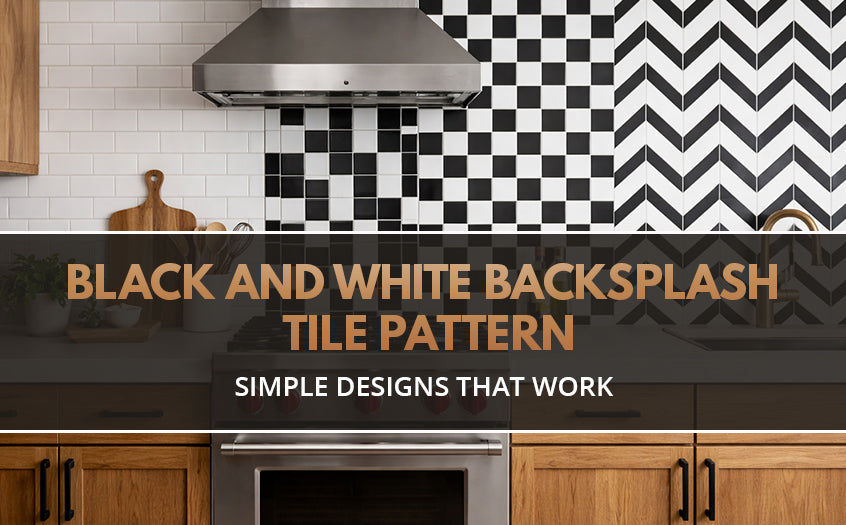
There’s a reason black and white never disappears from great kitchens and bathrooms: it’s clean, confident, and incredibly easy to style. A black and white backsplash tile can feel crisp and modern, warm and vintage, or quietly classic—depending on the pattern you choose and the finishes you pair it with.
If you’re planning a refresh (or a full remodel), this guide will walk you through simple black-and-white backsplash patterns that look intentional—not busy—and still stand up to real-life use. You’ll get practical tips for choosing the right pattern, choosing finishes that flatter your space, and installing it in a way that looks polished for years.
The Allure of Black and White: Timeless vs. Trendy
Black and white is one of the few design palettes that works across decades and styles. It can lean traditional when paired with warm metals and soft textures, or feel edgy and contemporary when paired with clean lines and matte finishes. In other words, it’s flexible—so your backsplash won’t feel “dated” the moment trends shift.
Timeless appeal across design styles
A black and white backsplash tile fits comfortably into:
- Modern and minimalist spaces where contrast creates structure and calm.
- Farmhouse and transitional rooms where black details (hardware, lighting) help ground the look.
- Vintage-inspired kitchens and baths that benefit from graphic pattern and a little personality.
- Eclectic interiors where black and white becomes the “neutral” that ties color, art, and textures together.
Practical benefits for kitchens and bathrooms
Beyond style, black and white backsplashes are practical. Light tile brightens a room, while darker accents can help hide small splashes and smudges. Many homeowners also love that monochrome patterns make it easier to swap décor later—new bar stools, paint color, or cabinet hardware can change the mood without forcing you to replace tile.
Top Simple Yet Stylish Black and White Backsplash Tile Patterns
The best patterns feel purposeful from across the room, then rewarding up close. Below are straightforward layouts that look “designed” without requiring complicated cuts or fussy styling.
Pattern 1: Classic Checkerboard
Checkerboard is bold, familiar, and surprisingly adaptable. In small doses—like behind a range or above a sink—it can read playful without taking over the room. In larger kitchens, it becomes a statement that still feels clean because it’s built from simple repetition.
- Best for: retro kitchens, charming breakfast nooks, powder rooms, and laundry spaces.
- Why it works: the contrast is balanced and the geometry is easy on the eyes.
- Pair it with: warm wood shelves, brushed brass hardware, or matte black fixtures for a modern edge.
Pattern 2: Vertical Stripe Layout
If you want something graphic but not loud, vertical stripes are a smart choice. They create the illusion of height—especially helpful in kitchens with low cabinets or in bathrooms with shorter ceilings. You can build stripes using rectangular tiles (stacked vertically) or a slim mosaic that naturally forms lines.
- Best for: modern kitchens, compact bathrooms, and spaces that feel a little “short” visually.
- Why it works: it adds movement while staying tidy and minimal.
- Pair it with: flat-front cabinets, simple counters, and understated lighting so the pattern stays crisp.
Pattern 3: Subway Tile with Dark Grout
This is the classic “simple but sharp” look. Subway tile is timeless on its own, and darker grout outlines each tile to create a subtle grid. It’s an easy way to bring in contrast without committing to a highly patterned surface.
- Best for: busy family kitchens, rental-friendly updates, and transitional designs.
- Why it works: the layout is familiar, and the dark grout adds definition and depth.
- Pair it with: white or light cabinets for a bright look, or darker cabinets for a moodier, modern feel.
Tip: If you love contrast but worry about maintenance, choose a grout tone that’s deep enough to hide everyday cooking splashes, then seal it properly after installation.
Pattern 4: Geometric Diamond Layout
Diamonds give you a little drama while still keeping the design structured and clean. Because the shapes are consistent, the pattern feels intentional instead of chaotic. This is a great choice when you want your backsplash to feel like a feature, especially behind open shelving or in a bar area.
- Best for: statement backsplashes behind ranges, coffee stations, wet bars, and entryway nooks.
- Why it works: diamonds add energy, but the black-and-white palette keeps it grounded.
- Pair it with: sleek stainless appliances, clean countertops, and simple cabinet hardware.
Pattern 5: Hexagon Mosaic Mix
Hexagons bring texture and a modern geometric feel—without needing a complex layout. A black-and-white hex mosaic can look soft and organic or crisp and contemporary depending on the finish (glossy, matte) and the exact mix of colors.
- Best for: smaller backsplash areas, bathroom vanities, and kitchens that need visual interest without busyness.
- Why it works: the shape feels fresh, while the palette stays classic.
- Pair it with: simple countertops and a streamlined faucet so the mosaic reads as intentional texture.
Bonus Pattern Ideas (Quick Inspiration)
- Basketweave: classic, tailored, and great for a refined kitchen or traditional bath.
- Herringbone: adds movement and a premium feel, even in a simple color palette.
- Large format with black accents: calmer overall, with just enough contrast to feel designed.
- Moroccan-inspired black and white: best used as a feature zone (range wall or bar backsplash) for a bold, curated look.
How to Choose the Right Black and White Backsplash Tile for Your Space
The “right” pattern isn’t just about style—it’s also about your room’s size, lighting, and how you use the space day to day. Here’s how to narrow it down with confidence.
Size and scale
In smaller kitchens, overly busy patterns can feel crowded. A safer bet is subway tile with dark grout, vertical stripes, or a smaller-scale mosaic used in a limited area. In larger kitchens, you can go bolder with checkerboard or diamond patterns because there’s more visual breathing room.
Texture and finish
Finish changes everything. Glossy tile reflects light and can make a room feel brighter. Matte tile feels modern and calm—especially in black—but shows texture and fingerprints a bit more easily. If you want low-maintenance shine, consider glossy whites with either matte or glossy black accents for balanced contrast.
Material and durability
For backsplashes, you want a surface that’s easy to wipe and tough enough for heat and splashes. Porcelain and ceramic are popular for everyday kitchens. Glass can look stunning and bright, especially in smaller spaces, while stone mosaics can add natural texture and depth. No matter the material, make sure it’s suitable for backsplash use and pair it with a grout and sealer plan that matches your lifestyle.
Quick checklist before you buy:
- How much natural and artificial light does the space get?
- Do you want bold pattern or quiet contrast?
- Will your counters and cabinets compete with the pattern?
- Are you comfortable maintaining grout lines (more mosaic = more grout)?
- Do you want glossy brightness or matte sophistication?
Installation Tips: Get the Look Right (Even on Your First Try)
A beautiful black and white backsplash tile comes down to planning. Straight lines, consistent spacing, and clean grout work will do more for the final look than any “fancy” tile choice.
Prep and planning
- Measure twice: Map the full backsplash area, including outlets and corners.
- Dry lay the pattern: Especially for checkerboard, diamonds, and mosaics. You want the pattern to look balanced at the edges.
- Start with a level reference: Use a level line or ledger board so your first row doesn’t drift.
Quick DIY tips
- Use tile spacers consistently—small shifts show more in high-contrast layouts.
- Plan your cuts so small slivers don’t land in the most visible areas.
- Keep a damp sponge handy during grouting and wipe in gentle passes for clean lines.
Pro secrets for perfect lines
- Choose grout thoughtfully: Dark grout adds structure, lighter grout softens contrast. Test a small section if possible.
- Seal grout when needed: Especially in cooking zones or behind a sink for easier cleanup over time.
- Use trim pieces for a finished edge (especially where tile ends near cabinets or open walls).
Black and White Backsplash Tile in Real Homes: Inspiration Gallery
Sometimes the best way to choose a pattern is to picture it in a real space. Here are a few “design directions” you can use as inspiration when planning your own backsplash.
- Modern farmhouse balance: White tile with dark grout, warm wood shelves, black hardware, and soft lighting for an inviting but structured look.
- Minimalist contrast: Vertical stacked tile in black and white with flat-front cabinets and a clean counter for a sleek, streamlined finish.
- Vintage charm: Checkerboard backsplash behind a range, paired with warm brass accents and classic cabinet profiles.
- Statement feature wall: Diamond or Moroccan-inspired black and white tile behind a cooktop, with simple surrounding finishes so the backsplash becomes the star.
- Soft modern texture: Hex mosaic mix behind a bathroom vanity with a simple mirror and warm-toned fixtures for a calm, updated feel.
Frequently Asked Questions
Q: What makes a black and white backsplash tile a good choice?
A: It’s versatile, timeless, and easy to coordinate with changing décor. Black and white also creates instant contrast, helping a backsplash look intentional without needing bold colors.
Q: Is black or white tile better for a small kitchen?
A: White usually makes a small kitchen feel brighter and more open. You can still get the black-and-white look by adding dark grout, small black accents, or a subtle pattern that doesn’t overwhelm the space.
Q: How do you keep dark grout looking clean?
A: Use a grout that’s designed for stain resistance, clean spills quickly, and seal grout when recommended. Regular gentle wiping (instead of harsh scrubbing) helps preserve the grout’s even color.
Q: Can I mix tile shapes and still keep the look cohesive?
A: Yes—just keep the palette consistent and limit the mix to one “hero” shape plus one supporting detail. For example, subway tile on the main wall with a small mosaic inset behind the stove can look curated, not cluttered.
Q; What are the most durable materials for busy kitchens?
A: Porcelain and ceramic are popular for a reason: they’re durable, easy to clean, and widely available in classic styles. If you choose mosaic, plan for more grout lines and follow a good sealing and cleaning routine.
Conclusion: Simple Patterns, Big Impact
A black and white backsplash tile doesn’t need to be complicated to look stunning. Checkerboard brings personality, subway tile with dark grout adds crisp definition, vertical stripes lift the room, and geometric mosaics offer texture with a modern edge. The key is choosing a pattern that suits your space, your lighting, and your day-to-day routine.
If you’re ready to narrow down your options, start by picking one pattern style you love, then match it with finishes that support it—rather than competing with it. And when you’re ready to bring your vision to life, explore the curated tile selection at Pebble Tile Shop. Browse black-and-white styles, compare materials and finishes, and consider ordering samples so you can see the contrast in your own lighting before you commit.

Leave a comment
This site is protected by hCaptcha and the hCaptcha Privacy Policy and Terms of Service apply.